
Playing cards may look simple, but their dimensions play a crucial role in gameplay, printing quality, storage, and packaging. At ProPackInsights, we often explore how product dimensions influence packaging design, and playing cards are a perfect example. Whether you’re designing custom cards, purchasing protective packaging, or simply curious about standard playing card size, understanding the correct measurements helps ensure compatibility and a professional finish.
In this guide, you’ll learn the standard playing card dimensions, poker card size, deck measurements, and how different card formats compare.
What Is the Standard Playing Card Size?
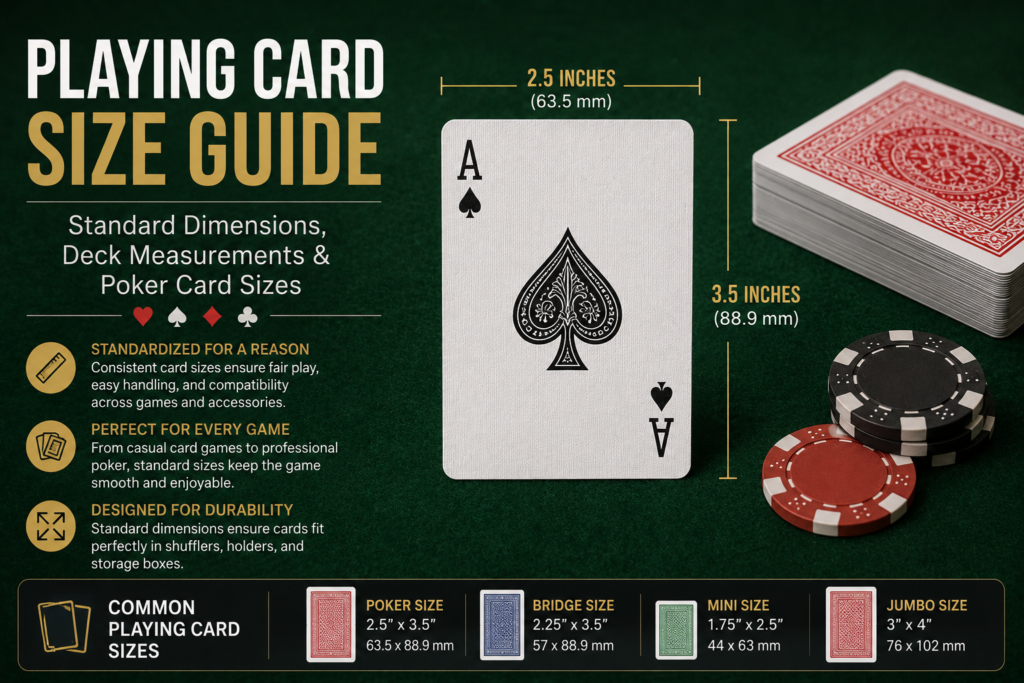
The standard playing card size is 2.5 inches × 3.5 inches (63.5 mm × 88.9 mm).
These dimensions are widely used for poker cards, casino decks, promotional card games, and many custom-printed card sets. Because this size has become the industry standard, most card boxes, storage cases, and accessories are designed around these measurements.
Standard Playing Card Dimensions
| Measurement Type | Size |
| Width | 2.5 inches (63.5 mm) |
| Height | 3.5 inches (88.9 mm) |
| Aspect Ratio | 5:7 |
| Standard Format | Poker Size |
When people search for playing card size dimensions, playing card measurements, or dimensions of a playing card, this is typically the size they are referring to.
What Are the Dimensions of a Deck of Cards?
A standard deck usually contains 52 playing cards along with optional jokers and promotional cards.
While individual card dimensions remain consistent, the size of a deck depends on:
- Number of cards
- Card stock thickness
- Surface coating
- Packaging style
Typical Deck of Cards Size
| Component | Approximate Measurement |
| Width | 2.5 inches |
| Height | 3.5 inches |
| Thickness | 0.7–1 inch |
Therefore, if someone asks, “What is the size of a deck of cards?” the answer depends largely on card thickness and packaging, although the card face dimensions remain standard.
Poker Card Dimensions Explained
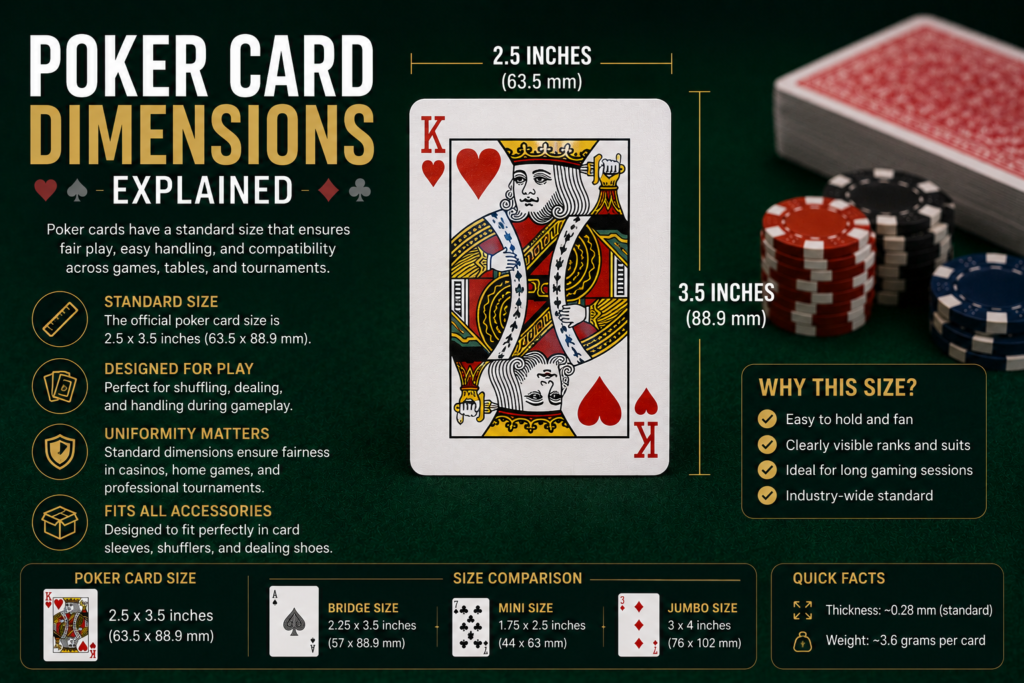
Poker cards are the most common playing card format used worldwide.
Poker Card Size
- Width: 2.5 inches (63.5 mm)
- Height: 3.5 inches (88.9 mm)
These poker card dimensions offer a larger printable area compared to narrower card styles, making them ideal for:
- Casino games
- Home card games
- Custom promotional decks
- Collectible cards
Many people use the terms poker card size and standard playing card size interchangeably because they usually refer to the same dimensions.
Why Are Playing Card Dimensions Standardized?
Standardization helps manufacturers, printers, and players maintain consistency across products.
Benefits include:
- Easier shuffling
- Better handling
- Consistent packaging
- Compatibility with card sleeves
- Uniform storage solutions
Without standard card dimensions, accessories such as card boxes, holders, and protective sleeves would become much more difficult to manufacture efficiently.
Common Playing Card Sizes Compared
Although poker cards dominate the market, several other formats exist.
| Card Type | Dimensions |
| Poker Cards | 2.5″ × 3.5″ |
| Bridge Cards | 2.25″ × 3.5″ |
| Mini Cards | 1.75″ × 2.5″ |
| Jumbo Cards | Varies |
| Tarot Cards | 2.75″ × 4.75″ |
This variation is why understanding card dimensions is important before designing custom packaging or ordering printed cards.
Playing Card Measurements for Custom Printing
When designing custom cards, the finished dimensions are only one part of the process.
Professional printers also consider:
Bleed Area
Additional artwork extending beyond the trim line.
Safe Zone
The area where important text and graphics should remain.
Corner Radius
Rounded corners improve durability and handling.
Card Stock Thickness
Thicker cards increase durability but also affect deck size and packaging requirements.
For businesses creating branded card decks, these factors are just as important as the final playing card dimensions.
Real-World Example: Packaging Challenges with Custom Card Decks
During a custom packaging project involving promotional playing cards, a manufacturer initially designed a rigid box based solely on card face dimensions.
However, after production began, the thicker premium card stock increased the deck thickness significantly. The original box design no longer provided a proper fit.
This experience demonstrates why packaging engineers consider both card dimensions and deck measurements during the design phase.
Real-World Example: Card Sleeve Compatibility
Another common issue occurs when businesses create custom-sized cards without considering accessory compatibility.
A custom deck measuring slightly larger than standard poker card dimensions required specially manufactured sleeves and storage boxes, increasing production costs.
Using standard playing card size dimensions often eliminates these problems while maintaining compatibility with existing accessories.
How Playing Card Size Impacts Packaging Design
Card dimensions directly influence packaging selection.
Packaging designers typically consider:
- Product protection
- Retail presentation
- Shipping requirements
- Storage efficiency
- Material costs
For larger production runs, corrugated packaging solutions are often used for bulk transportation. If you’re interested in shipping and protective packaging materials, check out our guide on Corrugated Packaging Types and Applications.
Choosing the right packaging structure helps prevent card damage during handling and transit.
Playing Cards vs Baseball Cards
Playing cards and baseball cards may appear similar at first glance, but their dimensions can vary depending on the product category.
Baseball cards generally follow a standardized format used throughout the collectibles industry. To learn more, read our guide on Baseball Card Dimensions and Standard Sizes.
Understanding these differences is important when selecting storage products, protective sleeves, and custom packaging solutions.
Conclusion
The standard playing card size is 2.5 inches × 3.5 inches, which also represents the most common poker card dimensions used today. Understanding playing card measurements, deck size, and packaging requirements helps manufacturers, designers, collectors, and businesses make informed decisions. Whether you’re creating custom card decks or selecting packaging solutions, accurate dimensions ensure better functionality, compatibility, and presentation.
What size are playing cards?
Standard playing cards measure 2.5 inches × 3.5 inches (63.5 mm × 88.9 mm).
What are the measurements of a playing card?
A standard playing card is 2.5 inches wide and 3.5 inches tall.
What size are poker cards?
Poker cards typically measure 2.5 inches × 3.5 inches, making them the most common card format worldwide.
What are the dimensions of a deck of cards?
A standard deck uses cards measuring 2.5 inches × 3.5 inches, while deck thickness usually ranges between 0.7 and 1 inch depending on card stock.
What is the standard size of a card?
For playing cards, the standard size is 2.5 inches × 3.5 inches.
Why do card dimensions matter?
Card dimensions affect gameplay, printing, packaging, storage, and compatibility with sleeves and accessories.


Pingback: Length, Width, and Height Explained: Correct Dimension Guide
Pingback: Baseball Card Dimensions: 2.5 x 3.5 in (63.5 x 88.9 mm)