

Choosing the right mason jar is easier when you understand its capacity, dimensions, mouth size, and intended use. At ProPackInsights, we look at product measurements from a practical packaging perspective, so this guide goes beyond a simple list of jar sizes. Whether you are comparing canning jars, planning food storage, choosing jars for drinks, or working with product packaging, knowing the difference between an 8 oz jar, pint jar, quart jar, and larger mason jar can save time and prevent mistakes.
Mason jars come in several capacities and shapes. Common options include 4 oz, 8 oz, 12 oz, 16 oz, 24 oz, 32 oz, and 64 oz sizes. Some are regular-mouth jars, while others use a wide-mouth design. Their actual dimensions can also vary by manufacturer and jar style.
This mason jar size guide explains the most common capacities, measurements, weights, mouth types, and practical uses so you can select the right jar for your project.
Mason Jar Sizes at a Glance
The easiest way to compare mason jars is by capacity.
| Mason Jar Size | Approx. Metric Capacity | Common Use |
| 4 oz | 118 mL | Samples, jams, small portions |
| 8 oz | 237 mL | Jams, sauces, gifts |
| 12 oz | 355 mL | Drinks and preserves |
| 16 oz | 473 mL | Pint storage, drinks |
| 24 oz | 710 mL | Food storage and beverages |
| 32 oz | 946 mL | Pickles, dry goods, drinks |
| 64 oz | 1.89 L | Large-batch storage |
These are approximate volume equivalents. Actual jar specifications can vary between brands and models.
What Are the Most Common Mason Jar Sizes?
Mason jars are available in different sizes because they serve different storage and preservation needs.
8 oz Mason Jar
An 8 oz jar holds approximately 237 mL.
It is a popular small mason jar size for:
- Jam
- Jelly
- Honey
- Sauces
- Spices
- Small desserts
- Homemade gifts
An 8 ounce jar is also useful when you want several small portions instead of one large container.
16 oz Mason Jar
A 16 oz mason jar is commonly called a pint jar.
One US pint contains 16 fluid ounces, or approximately 473 mL.
This is one of the most familiar mason jar sizes and works well for:
- Drinking
- Food storage
- Pickles
- Salsa
- Dry ingredients
- Meal preparation
The exact external dimensions depend on whether the jar has a regular or wide mouth.
24 oz Mason Jar
A 24 oz jar provides more capacity than a standard pint without being as large as a quart jar.
It can be useful for:
- Cold drinks
- Smoothies
- Larger food portions
- Pickled foods
- Pantry storage
32 oz Mason Jar
A 32 oz mason jar holds approximately 946 mL.
It is commonly associated with the quart-size category.
A 32 oz jar works well for larger quantities of:
- Pickles
- Vegetables
- Sauces
- Dry foods
- Beverages
- Fermented foods
Because it holds nearly one liter, it is also a practical option for bulk household storage.
64 oz Mason Jar
A 64 oz mason jar is a much larger option. It holds approximately 1.89 liters.
This large mason jar size can be useful for:
- Large-batch beverages
- Dry food storage
- Fermentation
- Kitchen displays
- Bulk ingredients
When choosing a large jar, remember that capacity is only one factor. Shelf height, jar diameter, lid type, and filled weight also matter.
Mason Jar Size Chart
Here is a more detailed canning jar sizes chart for quick reference.
| Capacity | Approx. Milliliters | Approx. Liters | Typical Category |
| 4 oz | 118 mL | 0.12 L | Small |
| 8 oz | 237 mL | 0.24 L | Small |
| 12 oz | 355 mL | 0.36 L | Small/Medium |
| 16 oz | 473 mL | 0.47 L | Pint |
| 24 oz | 710 mL | 0.71 L | Medium |
| 32 oz | 946 mL | 0.95 L | Quart |
| 64 oz | 1,893 mL | 1.89 L | Large |
The terms used by manufacturers can differ, so always check the product’s stated capacity before ordering jars in bulk.
How Many Ounces Are in a Mason Jar?
There is no single answer because mason jars come in many sizes.
A mason jar may hold:
- 4 oz
- 8 oz
- 12 oz
- 16 oz
- 24 oz
- 32 oz
- 64 oz
When someone asks how many ounces in a mason jar, they usually mean a specific jar capacity.
For example, a pint jar is 16 oz, while a quart jar is 32 oz.
So asking for the capacity without identifying the jar size can lead to confusion.
How Many Milliliters Are in a Mason Jar?
The same principle applies to milliliters.
A few common conversions are:
- 8 oz ≈ 237 mL
- 16 oz ≈ 473 mL
- 24 oz ≈ 710 mL
- 32 oz ≈ 946 mL
- 64 oz ≈ 1,893 mL
These conversions describe volume, not the physical dimensions of the glass jar.
What Are Mason Jar Dimensions?
Mason jar dimensions include more than capacity.
When measuring a jar, you may need to consider:
- Height
- Outside diameter
- Base diameter
- Mouth diameter
- Internal opening
- Shoulder width
- Lid diameter
- Overall capacity
Two jars can hold a similar amount of liquid while having different shapes.
For packaging and storage planning, physical dimensions are just as important as volume.
If you need help understanding how dimensions are normally described, see our guide on What Is Width and Length? It explains the difference between common product measurements and why dimension order matters.
Wide Mouth vs Regular Mouth Mason Jars
One of the biggest differences between mason jars is the mouth design.
Regular-Mouth Mason Jars
Regular-mouth jars have a narrower opening and are commonly used for:
- Traditional canning
- Jams
- Jellies
- Sauces
- General food storage
Their narrower opening can make them convenient for liquids and certain preserved foods.
Wide-Mouth Mason Jars
Wide-mouth mason jars have a larger opening.
They are useful for:
- Large food pieces
- Pickles
- Whole fruits
- Meal prep
- Easy cleaning
- Drinking
The larger opening also makes it easier to place and remove food from the container.
Wide Mouth Mason Jar Dimensions
There is no single universal dimension for every wide-mouth jar.
The exact width and height depend on capacity and manufacturer.
A wide-mouth jar typically has a larger opening than a regular-mouth version of a similar capacity. This changes how the jar feels in use, but it does not automatically mean the jar has a larger overall capacity.
For accurate packaging work, use the manufacturer’s technical specification rather than estimating dimensions from the jar’s capacity.
Mason Jar Specifications to Check Before Buying
If you are purchasing mason jars for a business, packaging project, or large-scale food preparation, check the full specifications.
Important details include:
Capacity
Confirm whether the listed capacity is 8 oz, 16 oz, 32 oz, or another size.
Height
Measure the jar from its base to the highest point.
Height matters when jars must fit inside:
- Shelves
- Cabinets
- Shipping cartons
- Display boxes
- Refrigerators
Diameter
The diameter determines how much horizontal space each jar needs.
This is especially important when calculating carton capacity.
Mouth Type
Confirm whether the jar uses a regular mouth or wide mouth.
Lid Compatibility
Not every lid fits every jar. Check the correct lid diameter and thread specification.
Glass Weight
The weight of the empty jar affects shipping costs and handling requirements.
How Much Does a Mason Jar Weigh?
The answer depends on the jar’s size and construction.
A larger glass jar generally weighs more than a smaller jar, but two jars with the same capacity can have different weights because of glass thickness and design.
For example, a thick-walled 16 oz jar may weigh more than a lightweight jar with the same nominal capacity.
This is why mason jar weight should be checked from the manufacturer’s specification when shipping costs or carton weight matter.
Do not confuse the jar’s empty weight with the weight of its contents.
How Much Does a Mason Jar Weigh in Grams?
The answer varies by model.
For example, a 16 oz mason jar weight in grams cannot be determined from its 16 oz capacity alone.
Why?
Because 16 oz describes the jar’s volume capacity. It does not tell you how much glass was used to manufacture the jar.
If you need to convert a known weight from ounces to grams, our guide How Many Grams in an Ounce? covers that conversion separately.
How Much Does a Mason Jar Hold?
The amount a mason jar holds depends on its stated capacity.
For example:
- Small mason jar: around 4–8 oz
- Medium jar: around 12–24 oz
- Pint jar: 16 oz
- Quart jar: 32 oz
- Large mason jar: 64 oz or more
However, the practical fill level can differ from the nominal capacity.
Canning also requires appropriate headspace, so a jar should not simply be filled to the very top.
Mason Jars for Drinking
Mason jars are often used as drinking glasses.
A 16 oz mason jar is especially popular because its pint-size capacity is convenient for water, iced tea, lemonade, and other beverages.
For drinking, wide-mouth jars can make it easier to add ice and clean the inside.
Some users also choose mason jar lids designed specifically for drinking.
These may include:
- Straw openings
- Drinking ports
- Reusable covers
- Sealed travel lids
Always use a lid intended for the specific jar model.
Canning Jar Sizes and Their Uses
Different canning jars are suited to different quantities.
| Jar Capacity | Good For |
| 4 oz | Small batches and samples |
| 8 oz | Jams and sauces |
| 12 oz | Small preserves and drinks |
| 16 oz | Pint recipes and storage |
| 24 oz | Medium portions |
| 32 oz | Pickles and larger batches |
| 64 oz | Bulk storage |
The best jar depends on the food, recipe, preservation method, and required headspace.
A Practical Example: Choosing a Jar for Homemade Jam
Suppose you are preparing a small batch of homemade strawberry jam.
Using one large jar may not be practical if the jam is intended as gifts.
Instead, several 8 oz jars can provide smaller portions and easier distribution.
The same product quantity can therefore be packaged differently depending on the intended use.
This illustrates an important packaging principle: the best container size depends on the customer and application, not just the amount of product.
A Practical Example: Choosing a Jar for Drinks
Imagine a café preparing iced drinks for customers.
A 16 oz mason jar provides a familiar serving size and enough room for ice. A larger 32 oz jar may be better for sharing or large beverages.
The jar’s capacity, physical dimensions, weight, and lid compatibility all need to be considered together.
This is why selecting packaging based only on ounces can lead to poor results.
Mason Jar Sizes for Storage
Mason jars are also useful for dry goods.
Common storage items include:
- Rice
- Beans
- Pasta
- Flour
- Sugar
- Spices
- Nuts
- Seeds
For pantry organization, consider both capacity and shelf dimensions.
A tall narrow jar may fit better on one shelf, while a shorter wide jar may be easier to access.
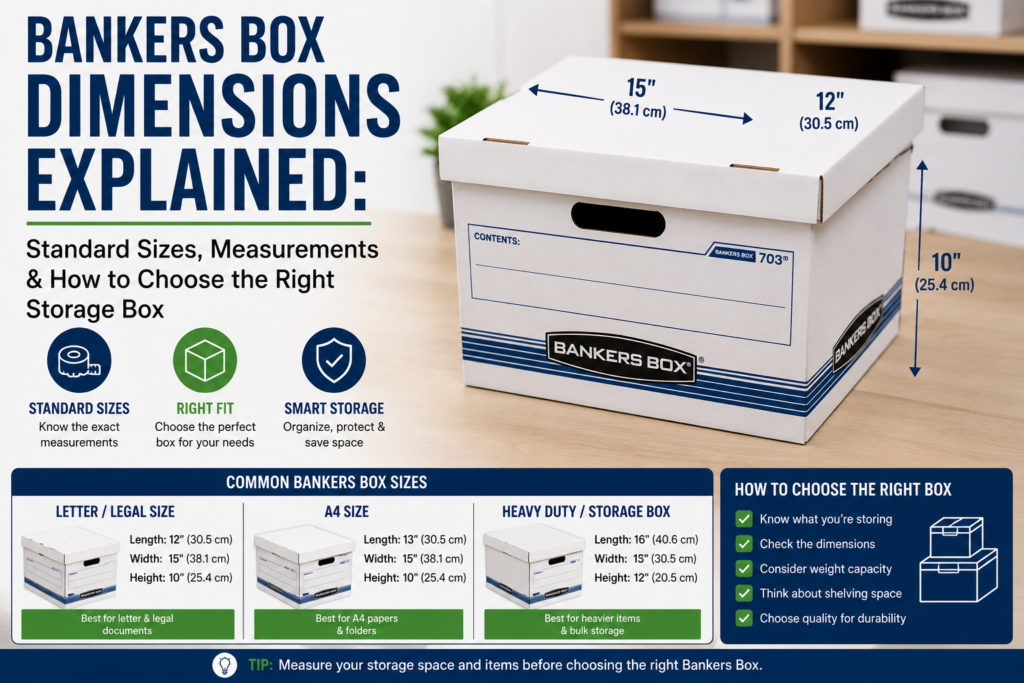
You can learn more about packaging and storage measurements through our guide on Bankers Box Dimensions, which explains how physical dimensions affect storage planning.
What Size Mason Jar Should You Choose?
Use the following simple guide:
Choose 4–8 oz for small portions, samples, jams, and gifts.
Choose 12–16 oz for drinks, personal portions, and everyday storage.
Choose 24–32 oz for larger food portions, pickles, and pantry storage.
Choose 64 oz when you need bulk storage or large-volume beverages.
If the jar will be shipped, also consider its filled weight and carton dimensions.
Mason Jar Sizes and Packaging
For businesses, selecting a mason jar is not just about appearance.
The jar must work with the entire packaging system.
Consider:
- Jar capacity
- Jar dimensions
- Empty weight
- Filled weight
- Lid compatibility
- Label area
- Shipping carton size
- Product protection
- Storage requirements
- Customer use
A jar that looks attractive but wastes carton space can increase shipping costs.
Likewise, a jar that holds the right volume but has too little label space may create a design problem.
Common Mason Jar Size Mistakes
Assuming Every Pint Jar Has Identical Dimensions
A pint tells you the approximate capacity. It does not guarantee identical height or diameter across manufacturers.
Confusing Capacity With Physical Size
A 32 oz jar does not tell you its exact height or width.
Ignoring the Mouth
Regular-mouth and wide-mouth jars behave differently during filling, cleaning, and use.
Forgetting Empty Jar Weight
Glass is heavy. Shipping calculations should include the container, product, lid, and packaging materials.
Choosing a Jar Without Checking the Lid
Always verify lid compatibility before purchasing large quantities.
Final Thoughts
Mason jars come in many sizes, so choosing the right one requires more than knowing its ounce capacity. The mason jar size, height, diameter, mouth style, lid compatibility, glass weight, and intended use all affect the final choice.
For quick reference, an 8 oz jar holds about 237 mL, a 16 oz pint jar holds about 473 mL, a 32 oz quart jar holds about 946 mL, and a 64 oz jar holds about 1.89 liters.
If you’re choosing jars for canning, drinking, food storage, or commercial packaging, always check the manufacturer’s exact specifications before placing an order.
The right jar should fit both the product and the way customers will use it. That approach gives you better storage, easier handling, more efficient packaging, and fewer surprises during shipping or production.
FAQs
What size is a standard mason jar?
There is no single universal standard size. Common mason jars include 8 oz, 16 oz, 32 oz, and 64 oz capacities.
How many ounces are in a standard mason jar?
If by standard you mean a pint mason jar, it holds 16 US fluid ounces. A quart mason jar holds 32 US fluid ounces.
How many ounces are in a small mason jar?
Small mason jars commonly range from about 4 to 8 ounces, depending on the model.

Pingback: How to Remove Tape Residue: Complete Removal Guide
Thank you for the auspicious writeup. It in fact was once a enjoyment account it.
Look complex to far introduced agreeable from you!
By the way, how can we be in contact?
jennytessa8@gmail.com
You ought to take part in a contest for one of the highest quality websites on the net.
I am going to highly recommend this blog!
Persons in the present day ought to study even more with regards to any of
these ideas, though there seems to hardly ever be ample time.
Following time for friends and family, and surely holding a job, exactly what energy is
remaining to allocate to understanding the concepts of each of these most essential instructions?
As an individual applying post-partum massage therapy, besides producing online websites and running
different servers, free time is unquestionably a commodity which i tend not to now have sufficient amounts of.
With any luck, I am capable of finding the energy essential to analyze
this really important issue more specifically. Many
thanks for creating this specific beneficial
reference or resource.
I really like your blog.. very nice colors & theme.
Did you design this website yourself or did you hire someone to do it for you?
Plz answer back as I’m looking to design my own blog and would like to know where u got this from.
kudos
Its such as you read my mind! You seem to understand
a lot about this, like you wrote the e book in it or something.
I think that you could do with a few percent to power the
message home a bit, however other than that, this is magnificent blog.
A fantastic read. I will certainly be back.
Hi my family member! I wish to say that this
article is awesome, nice written and include approximately all significant infos.
I would like to see extra posts like this .
Many people nowadays have to study way more concerning many of these subject areas, even though there will in no way turn out to be
ample precious time. Right after time for family, and needless to say doing business, just what time period is
remaining to expend to researching each of these vital theories?
As an individual doing postpartum massage therapy, and in addition planning
webpages and dealing with quite a few web servers, spare time is in truth a
thing i tend not to possess enough of. Most likely, I will be able to find the energy necessary to
examine this powerful subject matter more in-depth. Thanks
to you for offering this unique valued resource.
Thanks for finally talking about > Mason Jar Sizes: Chart, Dimensions,
Ounces & Guide < Loved it!
Awesome article.
Useful info. Fortunate me I discovered your site unintentionally, and I am shocked
why this twist of fate did not came about earlier!
I bookmarked it.
Thanks for sharing your thoughts about ufologies. Regards
You really make it seem so easy with your presentation but I
find this topic to be actually something that I think I would never understand.
It seems too complicated and extremely broad for me.
I’m looking forward for your next post, I’ll try
to get the hang of it!
Why users still use to read news papers when in this technological globe all
is existing on web?
Quality articles is the secret to be a focus for the people to pay a visit
the web site, that’s what this website is providing.
Wow, this article is nice, my younger sister is analyzing these kinds of things, thus I am
going to convey her.
I think this is one of the most important info for me. And i am
glad reading your article. But should remark on few general
things, The website style is wonderful, the articles is
really excellent : D. Good job, cheers
It’s truly a nice and helpful piece of info.
I am happy that you simply shared this helpful information with us.
Please keep us informed like this. Thank you for sharing.
Thank you, I’ve recently been looking for information approximately this subject
for a long time and yours is the greatest I have came upon till now.
But, what in regards to the conclusion? Are you sure
concerning the source?
What a data of un-ambiguity and preserveness of precious
know-how concerning unexpected emotions.
Does your blog have a contact page? I’m having trouble locating it but,
I’d like to send you an email. I’ve got some creative
ideas for your blog you might be interested in hearing.
Either way, great site and I look forward to seeing it
grow over time.
yes I do have contact page and my mail is also mention.
Today, while I was at work, my cousin stole my iPad and tested to see if
it can survive a twenty five foot drop, just so she can be a
youtube sensation. My iPad is now destroyed and she has 83 views.
I know this is entirely off topic but I had to share it with someone!
Excellent way of telling, and fastidious piece of
writing to obtain information regarding my presentation topic, which i am going to present in academy.
Good post. I learn something new and challenging on blogs I stumbleupon every day.
It’s always helpful to read through articles from other writers
and use something from their web sites.
Greate pieces. Keep posting such kind of info on your blog.
Im really impressed by it.
Hello there, You’ve performed a fantastic job. I will definitely
digg it and in my opinion suggest to my friends.
I am sure they will be benefited from this
site.
It’s awesome to pay a quick visit this site and reading the views
of all colleagues regarding this article, while I
am also keen of getting familiarity.
Hey very nice blog!