
You buy a bankers box thinking it’ll obviously fit your files. Then it doesn’t. Happens more than you’d think whether you’re cleaning out an office, packing for a move, or archiving old client records, the wrong box size turns into wasted money and a shelf that won’t close right. That’s basically the whole reason we started digging into product dimensions at ProPackInsights, get this one detail wrong and everything downstream gets annoying.
Most people can picture a bankers box. Cardboard, lid, handle holes on the side, probably sitting in a supply closet somewhere right now. But ask someone the actual size and you’ll get a shrug. “Aren’t they all the same?” No. Not even close, actually — there’s a letter-size version and a legal-size version, plus a few variations in between, and using the wrong one is how people end up with files that stick out or boxes that won’t stack.
We’ll get into the actual measurements below, plus how letter and legal sizes compare, why a couple extra inches changes what fits inside, and how to actually pick the right one instead of guessing.
What Is a Bankers Box?
A bankers box is a corrugated storage box designed to store, organize, transport, and archive paper documents. These boxes are commonly used in offices because they are lightweight, stackable, and easy to label.
Most banker boxes include:
- A removable lid
- Reinforced corrugated cardboard
- Comfortable carrying handles
- Space for file labels
- Stackable construction
Because they are designed specifically for paper storage, banker boxes are available in dimensions that match common document sizes such as letter and legal paper.
What Size Is a Bankers Box?
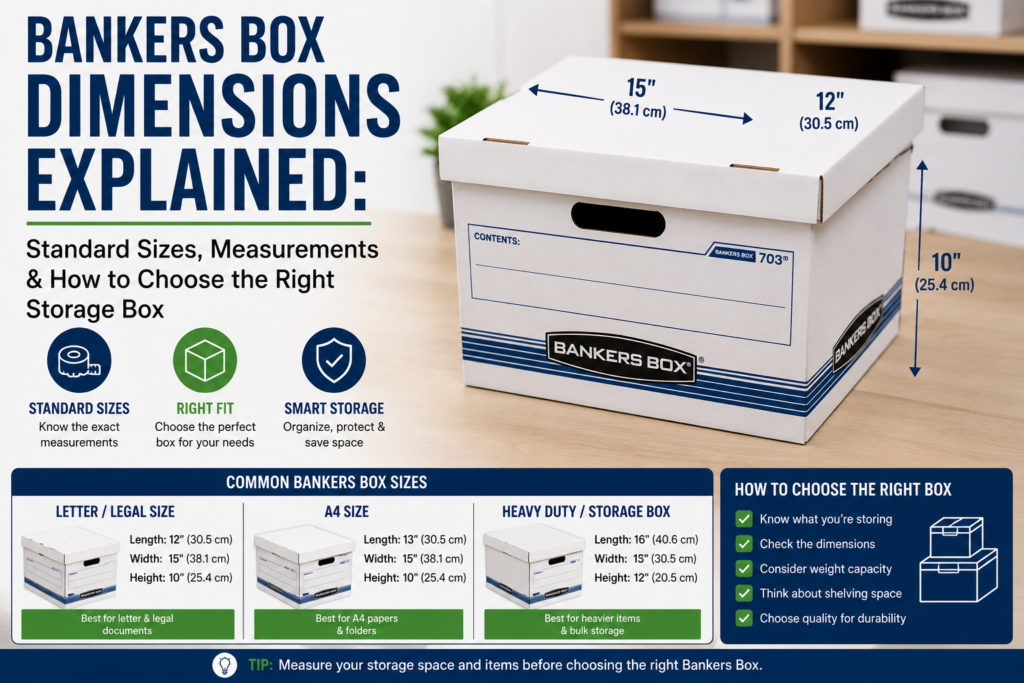
So what are the actual numbers? The most common standard bankers box dimensions come in at roughly 24 inches × 12 inches × 10 inches (Length × Width × Height). That said, don’t treat this as gospel — dimensions vary depending on whether the box is designed for letter-size files, legal-size files, or heavy-duty storage.
At this standard size, you’ve got enough room for hanging folders, archived paperwork, financial records, contracts, and general office documents — and it’s still light enough to actually lift and carry without your arms giving out halfway to the car.
Standard Bankers Box Dimensions
Although manufacturers offer different products, the following measurements are among the most common.
| Banker Box Type | Dimensions (L × W × H) | Best For |
| Standard Letter Box | 24″ × 12″ × 10″ | Letter-size documents |
| Legal Size File Box | 24″ × 15″ × 10″ | Legal-size folders |
| Medium Bankers Box | 16″ × 12″ × 10″ | Home storage |
| Small Bankers Box | 15″ × 12″ × 10″ | Personal files |
These banker box measurements may differ slightly by manufacturer, but most remain close to these industry standards.
Why Do Banker Box Dimensions Matter?
Many buyers focus only on storage capacity, but box dimensions affect much more than the number of files you can store.
Choosing the correct banker box size helps you:
- Protect important documents
- Maximize storage space
- Stack boxes safely
- Reduce shipping costs
- Organize records efficiently
- Prevent bending or folding of paperwork
For businesses managing hundreds of archived documents, even a one-inch difference in box dimensions can impact shelving efficiency.
Letter Size vs. Legal Size Bankers Boxes
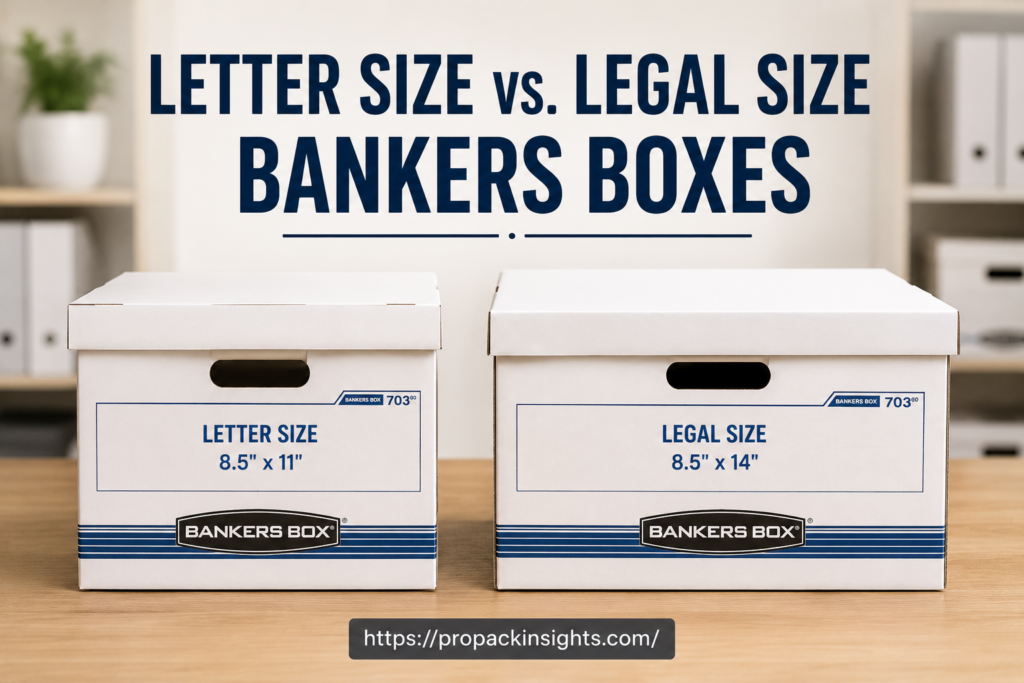
One of the biggest mistakes people make is purchasing a standard banker box without checking the document size they intend to store.
Letter Size Bankers Box
Designed for:
- 8.5 × 11-inch paper
- Office documents
- School records
- Business files
Approximate dimensions:
24″ × 12″ × 10″
Legal Size File Box
Designed for:
- 8.5 × 14-inch documents
- Legal contracts
- Property records
- Government paperwork
Approximate dimensions:
24″ × 15″ × 10″
The additional width allows legal folders to sit flat without bending or curling.
How Big Is a Bankers Box?
Another common question is:
How big is a bankers box?
The answer depends on its intended use.
Most standard banker boxes hold between 2,000 and 2,500 sheets of paper, depending on paper thickness and whether hanging folders are used.
Heavy-duty archive boxes may hold even more while offering greater stacking strength.
Understanding Banker Box Measurements
When manufacturers list dimensions, they usually follow the standard format:
Length × Width × Height (L × W × H)
For example:
24 × 12 × 10 inches
means:
- Length = 24 inches
- Width = 12 inches
- Height = 10 inches
If you’re unsure how these measurements work, our detailed guide on What Is Width and Length? explains how to identify each dimension correctly and why the order matters when comparing product specifications.
Internal vs. External Dimensions
A detail many buyers overlook is the difference between internal and external measurements.
External Dimensions
These measure the outside of the box and determine how much storage space the box occupies on shelves or during transportation.
Internal Dimensions
These measure the usable storage area inside the box.
The internal dimensions are slightly smaller because of the thickness of the corrugated cardboard.
If you’re storing binders, storage cases, or specialty products, always verify the internal measurements before purchasing.
Real-World Example: Choosing the Wrong File Box
While helping organize archived business records, we found that several years of legal contracts had been placed inside standard letter-size banker boxes.
Although the files technically fit, many folders became bent along the edges because the boxes weren’t wide enough for legal-size documents.
Replacing those boxes with legal-size banker boxes immediately solved the issue and made future file retrieval much easier.
This simple experience highlights why understanding bankers box dimensions before purchasing can prevent unnecessary damage and improve long-term document storage.
What Materials Are Banker Boxes Made From?
Most banker boxes are manufactured using corrugated cardboard because it offers an excellent balance of strength, lightweight construction, and affordability.
Common materials include:
- Single-wall corrugated board
- Double-wall corrugated board
- Recycled paperboard
- Heavy-duty archival cardboard
The material you choose depends on how frequently the box will be moved and how long documents will remain in storage.
For long-term archives, heavy-duty corrugated banker boxes provide greater stacking strength and better protection against crushing.
How Banker Box Dimensions Affect Packaging and Shipping
If you’re shipping documents instead of storing them, dimensions become even more important.
A box that is too large allows files to shift during transport, while one that is too small can damage folder edges.
Accurate measurements also help reduce shipping costs because many carriers calculate charges using dimensional weight rather than actual weight.
Understanding dimensions is equally important when storing collectibles or specialty products. For example, our guide on Playing Card Size explains why precise measurements matter when selecting protective packaging for trading cards and gaming accessories.
How to Choose the Right Banker Box Size
Not every storage project requires the same type of banker box. The best choice depends on what you plan to store, how often you’ll access the contents, and where the boxes will be kept.
Before purchasing banker boxes, consider the following factors:
1. Document Size
Start by identifying whether you’re storing:
- Letter-size files (8.5″ × 11″)
- Legal-size files (8.5″ × 14″)
- Mixed document sizes
Choosing the correct dimensions prevents folders from bending and helps maintain an organized filing system.
2. Storage Duration
If you’re storing documents for only a few months, a standard banker box is usually sufficient.
For long-term archives, look for boxes with reinforced corners and stronger corrugated construction. These offer better protection against stacking pressure and repeated handling.
3. Weight Capacity
Many people ask:
“How much does a bankers box of paper weigh?”
A standard banker box filled with office paper typically weighs 30–40 pounds (13–18 kg), depending on the paper type, file folders, and additional contents.
Heavy-duty banker boxes are designed to safely support this weight while remaining stackable.
4. Available Storage Space
Measure your shelving, cabinets, or storage room before purchasing boxes.
Knowing your available space allows you to maximize storage efficiency and avoid wasted shelf space.
Common Banker Box Sizes Compared
| Box Type | Typical Dimensions | Recommended Use |
| Small Bankers Box | 15″ × 12″ × 10″ | Personal documents |
| Medium Bankers Box | 16″ × 12″ × 10″ | Home office storage |
| Standard Letter Box | 24″ × 12″ × 10″ | Letter-size files |
| Legal File Box | 24″ × 15″ × 10″ | Legal documents |
| Heavy-Duty Archive Box | Varies | Long-term records |
Although manufacturers may have slightly different specifications, these dimensions represent the most common banker box sizes available today.
Common Mistakes When Buying Banker Boxes
Choosing a banker box may seem straightforward, but several mistakes can reduce storage efficiency.
Avoid these common issues:
- Buying a letter-size box for legal documents.
- Ignoring internal dimensions.
- Overloading lightweight boxes.
- Stacking beyond the recommended weight limit.
- Choosing low-quality cardboard for long-term storage.
- Purchasing boxes without considering shelf dimensions.
These small mistakes can lead to damaged documents, unstable stacks, and unnecessary replacement costs.
Tips for Organizing Banker Boxes
Proper organization makes retrieving documents much easier in the future.
Here are a few best practices:
- Label every box clearly.
- Group similar records together.
- Place frequently accessed files near the front.
- Keep heavy boxes on lower shelves.
- Leave a small amount of space inside each box to prevent folder damage.
- Use color-coded labels for different departments or years.
These simple habits improve efficiency and reduce time spent searching for documents.
Bankers Box vs. Plastic Storage Box
Many buyers wonder whether cardboard banker boxes or plastic storage containers are the better choice.
| Feature | Banker Box | Plastic Storage Box |
| Cost | Lower | Higher |
| Weight | Lightweight | Heavier |
| Stackability | Excellent | Good |
| Recyclability | High | Moderate |
| Long-Term Moisture Protection | Limited | Better |
| Office Filing | Excellent | Good |
For everyday office archives and document storage, banker boxes remain one of the most practical and cost-effective solutions.
Real-World Experience: Why the Right Box Size Matters
We saw this play out firsthand during an office relocation project. Teams using correctly sized banker boxes just moved faster — packing was quicker, plain and simple, compared to teams stuck wrestling with oversized moving cartons.
The banker boxes did their job: folders stayed upright, paperwork didn’t slide around during the actual move, and unpacking on the other end was way more organized — everything came out roughly how it went in. The oversized boxes told a different story. Files shifted around in transit, folders got bent, and there was a lot of dead space just going to waste.
It was a good reminder, honestly: getting the correct banker box dimensions right isn’t just a storage detail. It’s about protecting the documents themselves and not losing hours to a preventable mess.
Final Thoughts
Banker boxes stick around as one of the go-to storage solutions for businesses, schools, law firms, and regular homeowners for a simple reason — they’re cheap, they keep things organized, and they hold up over time. Knowing the standard bankers box dimensions is really what lets you pick the right size, whether that’s for letter files, legal documents, archived records, or stuff you’re storing away long-term. Before you buy, check both internal and external measurements, think about what kind of documents you’re actually storing, and pick a box that fits your space, not just the one that’s cheapest on the shelf. Get the size right and you’re protecting your records, keeping things organized, and making the whole moving process a lot less painful. At the end of the day, whether you’re archiving financial documents, packing up an office, or just sorting through personal paperwork at home, choosing the correct banker box dimensions is what keeps your records secure, accessible, and in good shape for years down the line.
FAQs
What is a bankers box?
A bankers box is a corrugated cardboard storage box designed for organizing, transporting, and archiving office documents.
What size is a bankers box?
The most common standard banker box measures approximately 24 × 12 × 10 inches, although legal-size and specialty versions are also available.
What are the dimensions of a bankers box?
Standard banker box dimensions vary by model, but letter-size boxes are typically around 24″ × 12″ × 10″, while legal-size versions are approximately 24″ × 15″ × 10″.
What is the standard banker box size?
For most offices, the standard banker box size is designed to hold letter-size hanging files and measures roughly 24 × 12 × 10 inches.
What is a legal size file box?
A legal-size file box is slightly wider than a standard letter-size banker box, allowing it to accommodate 8.5 × 14-inch legal documents without folding.
How big is a bankers box?
Most banker boxes comfortably hold 2,000–2,500 sheets of paper, depending on paper thickness and file folders.
Can banker boxes be stacked?
Yes. Most banker boxes are designed to be stacked, but always follow the manufacturer’s recommended weight limits to maintain stability.
Are banker boxes recyclable?
Yes. Most banker boxes are manufactured from corrugated cardboard and can be recycled after use.

What’s up, this weekend is pleasant for me, as
this moment i am reading this wonderful informative piece of writing here at my house.
Pingback: Baseball Card Dimensions: 2.5 x 3.5 in (63.5 x 88.9 mm)