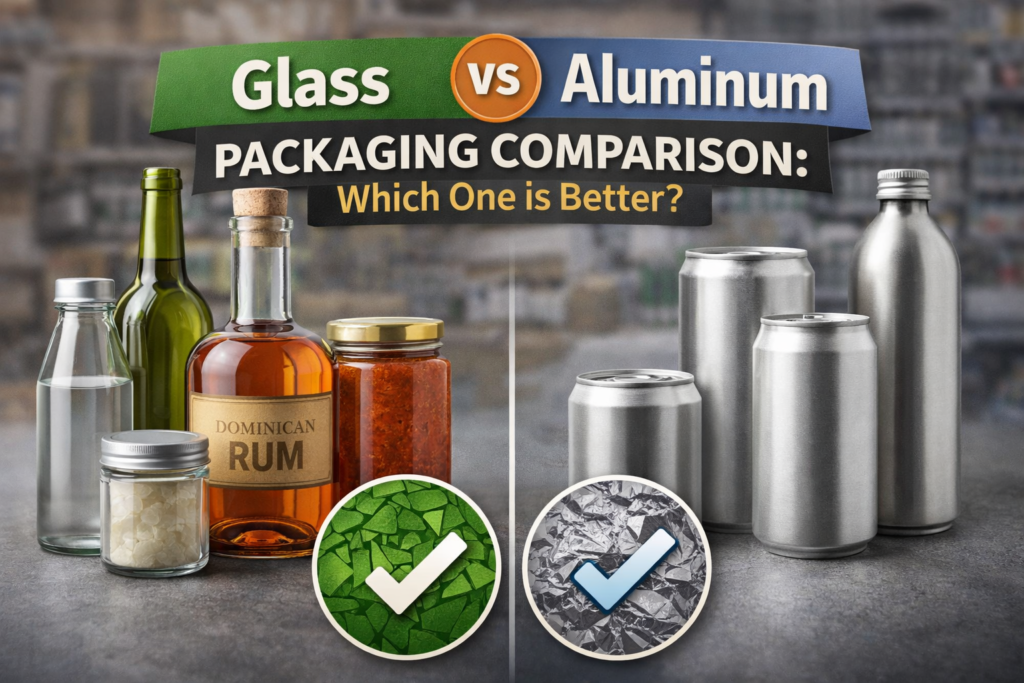
Glass vs Aluminum choosing the right packaging material is crucial for product safety, branding, and sustainability. At Propackinsights, we help businesses evaluate packaging options based on real-world performance and global trends. In this guide, we break down the glass vs aluminum packaging comparison to help you decide which material best fits your product.
Glass vs Aluminum Packaging: Key Differences
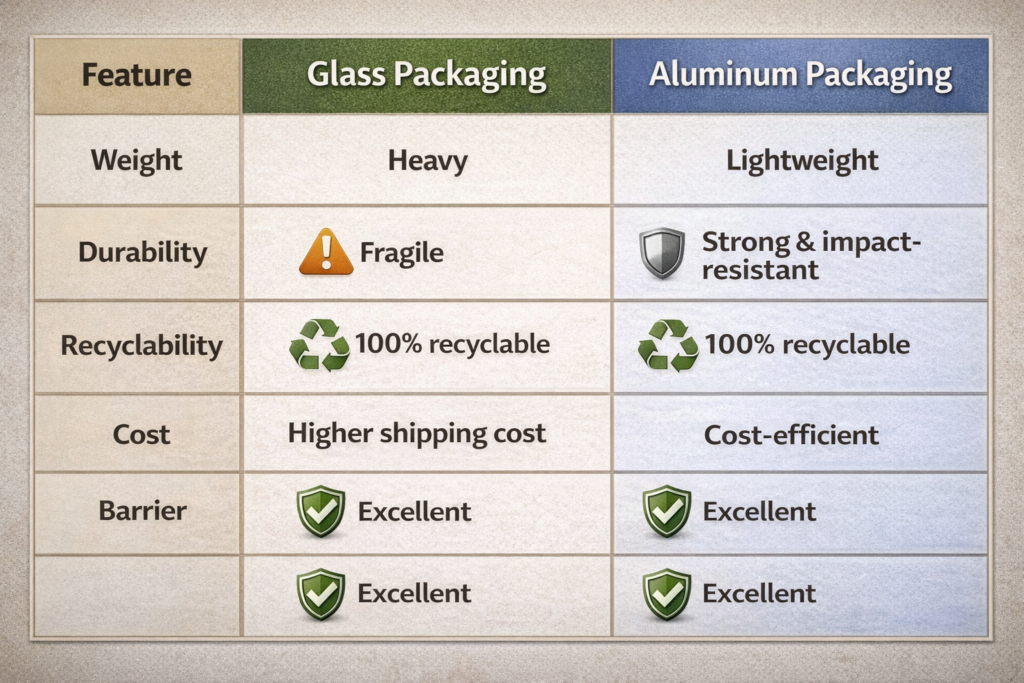
When comparing glass vs aluminum packaging, the decision depends on durability, cost, recyclability, and product compatibility.
What is Glass Packaging?
Glass packaging is made from natural materials like sand, soda ash, and limestone. It is widely used in food, beverages, cosmetics, and pharmaceuticals.
Benefits of Glass Packaging
- Non-reactive and chemically stable
- Preserves taste and quality
- Premium look and feel
- Reusable and recyclable
Limitations of Glass Packaging
- Heavy weight increases shipping costs
- Breakable during transit
- Higher energy consumption in production
What is Aluminum Packaging?
Aluminum packaging is widely used for cans, containers, and flexible packaging solutions.
Benefits of Aluminum Packaging
- Lightweight and easy to transport
- Highly durable and crush-resistant
- Excellent barrier against light, oxygen, and moisture
- Infinitely recyclable
Limitations of Aluminum Packaging
- Can dent under pressure
- Limited transparency (cannot see inside)
- Requires coating for certain products
Glass vs Aluminum Packaging for Food and Beverages
When it comes to food and beverage packaging comparison, both materials offer strong benefits.
Glass Packaging for Food
- Ideal for sauces, jams, and premium drinks
- Maintains flavor without contamination
Aluminum Packaging for Beverages
- Common in soft drinks and energy drinks
- Faster cooling and better portability
👉 If branding and product visibility matter, glass is preferred.
👉 If convenience and shipping efficiency matter, aluminum wins.
Sustainability: Glass vs Aluminum Packaging
Is Glass More Sustainable than Aluminum?
Both materials are sustainable, but the impact differs:
- Glass:
- Recyclable but energy-intensive
- Heavier → higher carbon footprint in transport
- Aluminum:
- Highly recyclable with lower energy reuse
- Lightweight → reduces emissions during shipping
👉 In many cases, aluminum packaging is considered more energy-efficient, while glass is valued for purity and reusability.
For a broader sustainability perspective, you can explore our guide on biodegradable packaging materials uses and benefits.
Cost Comparison: Glass vs Aluminum Packaging
Which Packaging is More Cost-Effective?
- Glass: Higher production and transportation cost
- Aluminum: Lower logistics cost due to lightweight nature
For businesses scaling globally, aluminum often provides a better ROI.
Durability & Protection
Which Material Protects Better?
- Glass: Excellent barrier but fragile
- Aluminum: Strong, impact-resistant, and better for shipping
If your product requires long-distance shipping, aluminum is typically the safer choice.
Use Cases: When to Choose Glass vs Aluminum
Choose Glass Packaging If:
- You sell premium or luxury products
- Product purity is critical
- You want a high-end appearance
Choose Aluminum Packaging If:
- You need lightweight and durable packaging
- You ship products frequently
- You want cost-efficient logistics
For more insights into different materials, check our detailed breakdown of packaging materials types and global industry trends.
Future Trends in Glass and Aluminum Packaging
- Increased focus on lightweight glass innovation
- Growth of aluminum in sustainable packaging
- Smart packaging integration
- Shift toward circular economy models
Both materials will continue to evolve with sustainability and efficiency in mind.
Final Thoughts
The glass vs aluminum packaging comparison ultimately depends on your product type, budget, and business goals. Glass offers premium quality and purity, while aluminum provides durability and cost efficiency.
At Propackinsights, we guide businesses in choosing the right packaging materials to stay competitive in global markets. If you’re still exploring options, don’t miss our article on common packaging materials you should know about to build a complete understanding of packaging solutions.
FAQs
Is aluminum or glass better?
Neither is universally better—it depends on the use case. Glass packaging is ideal for preserving product purity and offering a premium look, while aluminum packaging is better for durability, lightweight shipping, and cost efficiency. For beverages and large-scale distribution, aluminum is often preferred, whereas glass is chosen for high-end or sensitive products.
Why do we no longer use glass bottles?
Glass bottles are still used, but many industries have shifted toward aluminum and plastic because glass is heavier, more fragile, and increases transportation costs. Aluminum, in particular, is easier to handle, cheaper to ship, and more durable, making it more practical for modern supply chains.
What are the disadvantages of glass packaging?
Glass packaging has several drawbacks:
Fragile and can break easily
Heavier than alternatives, increasing shipping costs
Higher energy consumption during production
Requires careful handling and storage
These factors make it less suitable for high-volume or long-distance shipping.
What are the advantages of glass as a packaging material?
Glass offers multiple benefits:
Non-reactive and preserves product quality
Provides a premium and high-end appearance
100% recyclable and reusable
Excellent barrier against air, moisture, and chemicals
Because of these advantages, glass remains a top choice for food, beverages, and pharmaceutical packaging.
Which is better: glass or aluminum packaging?
It depends on your needs. Glass is better for premium and non-reactive storage, while aluminum is better for durability and cost efficiency.
Is aluminum packaging more sustainable than glass?
Aluminum is often more energy-efficient due to its lightweight nature, while glass is fully recyclable and reusable.
Why is aluminum used for beverages?
Aluminum is lightweight, cools quickly, and provides excellent protection against light and air.
Is glass packaging safer than aluminum?
Glass is non-reactive and preserves product purity, making it safer for certain food and pharmaceutical products.
Which packaging is cheaper: glass or aluminum?
Aluminum is generally more cost-effective due to lower transportation and production costs.