
Packaging materials form the backbone of modern supply chains, retail systems, and global trade. From industrial manufacturing to direct-to-consumer e-commerce, the right packaging material determines product protection, regulatory compliance, logistics efficiency, and brand positioning.
The global packaging industry is valued at over $1 trillion, with the United States representing one of the largest and most technologically advanced markets. Increasing environmental regulation, sustainability demands, and rapid e-commerce expansion are reshaping how packaging materials are selected and engineered.
This guide provides a comprehensive overview of different packaging materials, including types, applications, cost considerations in the USA, sustainability developments, and global industry trends for 2026.
What Are Packaging Materials?
Packaging materials are substances used to enclose, protect, transport, store, and present products. They serve multiple strategic functions:
- Product protection during transportation
- Shelf-life extension
- Branding and consumer engagement
- Regulatory compliance
- Supply chain optimization
Material selection varies depending on product sensitivity, transportation distance, sustainability goals, and cost structure.
Global Packaging Industry Overview
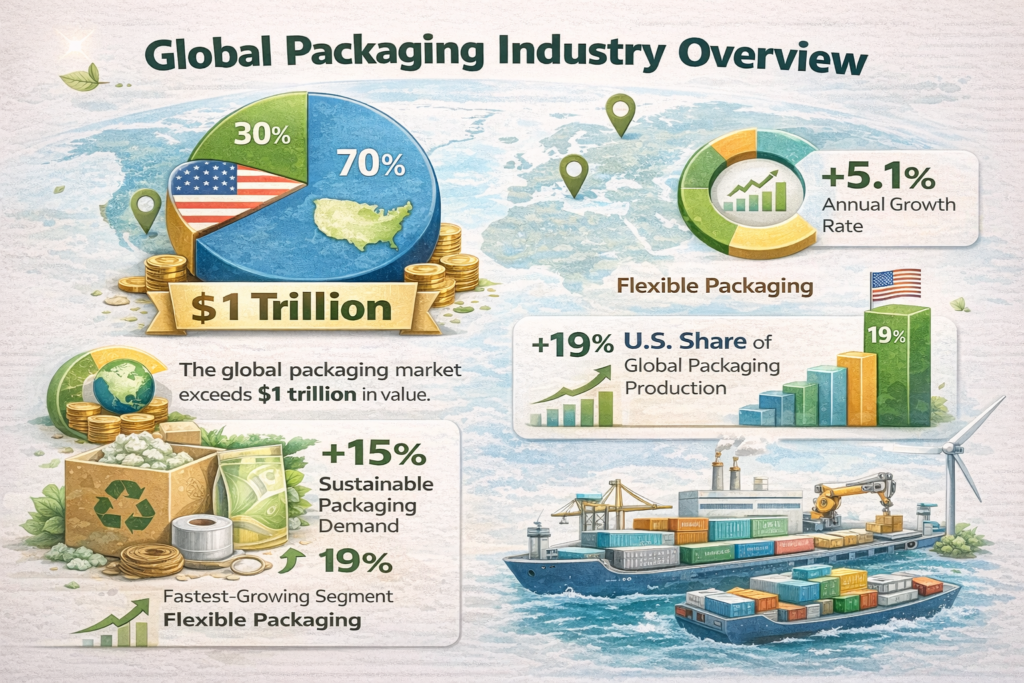
The global packaging industry continues steady expansion driven by consumer demand, industrial growth, and digital commerce.
Key industry insights:
- The global packaging market exceeds $1 trillion in value.
- The United States is among the top contributors in packaging production and innovation.
- Flexible packaging is one of the fastest-growing segments due to material efficiency.
- Sustainable packaging materials demand is rising significantly across North America and Europe.
Growth is particularly strong in food & beverage, pharmaceuticals, personal care, and e-commerce packaging materials.
Main Types of Packaging Materials
Plastic Packaging Materials
Plastic remains one of the most widely used packaging materials globally due to versatility and cost efficiency.
Common types include:
- PET (Polyethylene Terephthalate)
- HDPE (High-Density Polyethylene)
- LDPE (Low-Density Polyethylene)
- PP (Polypropylene)
Applications:
- Food containers
- Beverage bottles
- Flexible packaging films
- Industrial wrapping
While cost-effective and lightweight, plastic packaging faces increasing environmental scrutiny in the USA and global markets.
Paper & Corrugated Packaging Materials
Corrugated packaging materials dominate shipping and e-commerce distribution.
Common formats:
- Corrugated boxes
- Folding cartons
- Kraft paper packaging
Advantages:
- High recyclability
- Cost-effective for bulk shipping
- Strong structural integrity
In the United States, corrugated packaging materials are widely used for online retail and logistics operations.
Glass Packaging
Glass packaging is preferred for:
- Beverages
- Pharmaceuticals
- Cosmetics
Advantages:
- 100% recyclable without quality loss
- Strong chemical resistance
- Premium brand perception
However, transportation costs are higher due to weight and fragility.
Metal Packaging
Metal packaging primarily includes:
- Aluminum cans
- Steel containers
Benefits:
- Extended shelf life
- High barrier protection
- Strong recyclability rates
Metal packaging remains dominant in the U.S. beverage and processed food sectors.
Flexible Packaging Materials
Flexible packaging materials include:
- Pouches
- Laminated films
- Sachets
This segment is growing rapidly in the global packaging industry due to:
- Reduced material usage
- Lightweight properties
- Cost savings in logistics
Flexible packaging materials are widely used in snacks, frozen foods, and personal care products.
Sustainable Packaging Materials
Sustainable packaging materials are engineered to minimize environmental impact while maintaining performance.
Examples include:
- Biodegradable plastics
- Compostable packaging
- Recycled paperboard
- Plant-based packaging solutions
Across the United States and Europe, regulatory pressure and consumer awareness are accelerating the shift toward eco-friendly packaging materials.
Companies are increasingly investing in recyclable design, reduced material weight, and circular economy models.
Packaging Materials for E-commerce
The growth of online retail has significantly influenced packaging material demand.
Key requirements include:
- Durable corrugated shipping boxes
- Protective cushioning materials
- Tamper-evident packaging
- Sustainable shipping solutions
E-commerce packaging materials must balance cost efficiency with durability to withstand long-distance shipping.
Packaging Material Cost in USA
Packaging material cost in USA varies based on:
- Raw material prices
- Order volume
- Transportation costs
- Sustainability features
- Customization requirements
General observations:
- Corrugated packaging is cost-effective at scale.
- Plastic packaging offers low production costs but faces regulatory risks.
- Glass and metal involve higher logistics costs due to weight.
For industrial buyers, long-term cost efficiency depends on supply chain optimization and material performance.
Industrial Packaging Materials
Industrial packaging materials are designed for heavy-duty protection and bulk transportation.
Common examples:
- Wooden pallets
- Steel drums
- Heavy-duty corrugated containers
- Stretch wrap
These materials are used in:
- Automotive manufacturing
- Chemical distribution
- Machinery transport
- Bulk material logistics
Protection, regulatory compliance, and durability are critical in industrial packaging applications.
Regulatory Landscape in the United States
Businesses operating in the U.S. packaging market must comply with evolving regulatory frameworks.
Key considerations include:
- Environmental protection standards
- Recycling mandates in certain states
- Extended Producer Responsibility (EPR) policies
- Food-grade packaging regulations for FDA compliance
Regulatory shifts are significantly influencing material innovation and sustainability adoption.
Global Packaging Industry Trends
Several trends are shaping the future of packaging materials globally:
- Increased adoption of sustainable packaging materials
- Growth of flexible packaging for efficiency
- Automation in packaging production
- Smart packaging integration (QR codes, tracking systems)
- Lightweight material innovation
- Circular economy implementation
The United States continues to play a major role in material innovation and sustainability-driven development.
How to Choose the Right Packaging Material
Selecting the right packaging material requires evaluating:
- Product sensitivity
- Transportation requirements
- Environmental regulations
- Consumer expectations
- Budget constraints
Strategic material selection improves supply chain efficiency, regulatory compliance, and brand reputation.
Conclusion
Packaging materials are evolving rapidly in response to sustainability demands, regulatory developments, and the expansion of e-commerce. Businesses targeting the United States and global markets must balance cost efficiency, environmental responsibility, and performance reliability.
At Propackinsights, understanding packaging materials, cost structures, and global industry trends helps companies make strategic, future-ready decisions in a competitive marketplace.
What are the most commonly used packaging materials?
Plastic, paperboard, corrugated fiberboard, glass, metal, and flexible laminates are the most widely used packaging materials globally.
What is the most sustainable packaging material?
Recycled paperboard and aluminum are among the most recyclable materials, while compostable and plant-based materials are emerging alternatives.
Which packaging material is best for e-commerce businesses?
Corrugated packaging materials are most commonly used due to durability, lightweight properties, and cost efficiency.
How much do packaging materials cost in the USA?
Costs vary depending on material type, order volume, transportation, and sustainability features, with corrugated packaging generally being cost-effective at scale.
Pingback: Most Common Packaging Materials You Should Know About - propackinsights
Pingback: Glass vs Aluminum Packaging Comparison: Which One is Better? - propackinsights
Pingback: Corrugated Packaging: Types and Applications - propackinsights
Pingback: Latest Packaging Design Trends 2026: Sustainability, Accessibility & New Luxury Standards - propackinsights