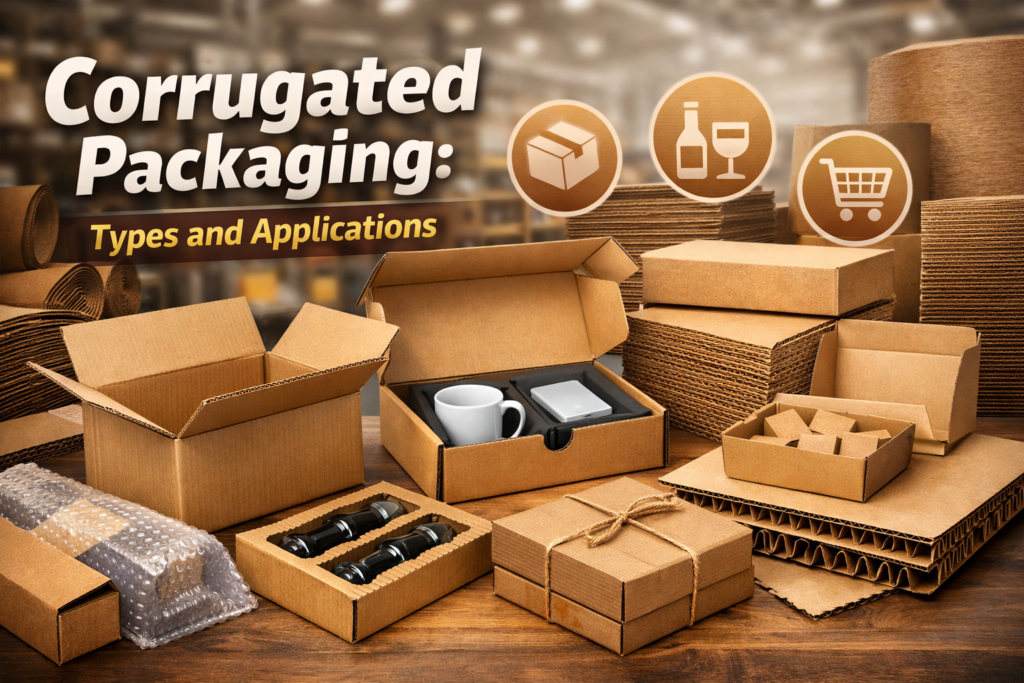
Corrugated Packaging and materials, in today’s global packaging industry, dominate due to their strength, flexibility, and cost-efficiency. At Propackinsights, we focus on helping businesses understand modern packaging systems that improve logistics, sustainability, and branding. Corrugated packaging stands at the center of this transformation, especially for eCommerce, retail, and industrial shipping.
If you’re exploring packaging options or expanding your knowledge base, understanding corrugated materials is essential for long-term scalability.
What is Corrugated Fiberboard?
Corrugated fiberboard is a multi-layered packaging material made by combining a fluted corrugated sheet with one or two flat linerboards. This structure creates durability while remaining lightweight.
Corrugated Boxes Definition
Corrugated boxes are containers made from corrugated fiberboard, designed to protect goods during shipping and storage. These boxes are widely used across industries due to their shock absorption and stacking strength.
Corrugated Fibreboard Packaging Explained
Corrugated fibreboard packaging refers to all packaging solutions made using corrugated sheets—ranging from shipping cartons to retail-ready displays. Its versatility makes it a top choice globally.
Types of Corrugated Flutes (Flute Chart & Thickness)
Understanding flute types is critical because each one serves a different purpose.
Corrugated Cardboard Flute Chart
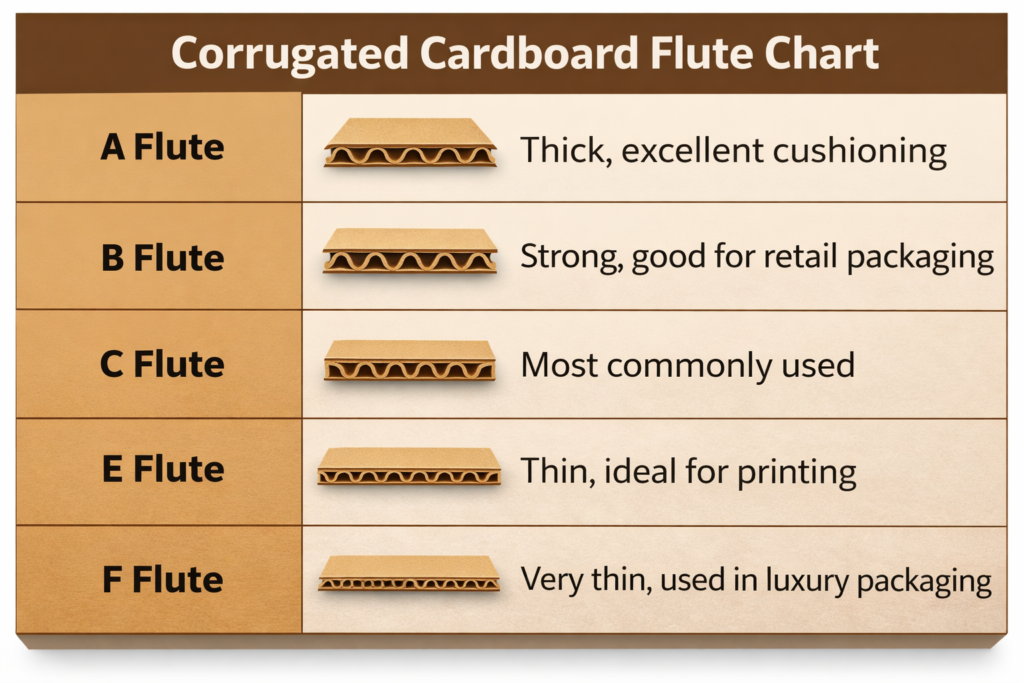
- A Flute – Thick, excellent cushioning
- B Flute – Strong, good for retail packaging
- C Flute – Most commonly used
- E Flute – Thin, ideal for printing
- F Flute – Very thin, used in luxury packaging
E-Flute Cardboard Thickness (mm)
E-flute is one of the most popular choices for lightweight packaging.
- E flute thickness: approx. 1–1.5 mm
- Ideal for:
- Folding cartons
- Printed packaging
- Retail boxes
E Flute vs B Flute
| Feature | E Flute | B Flute |
| Thickness | Thinner (~1–1.5 mm) | Thicker (~2.5–3 mm) |
| Strength | Moderate | High |
| Print Quality | Excellent | Good |
| Use Case | Retail boxes | Shipping boxes |
👉 In simple terms:
- Use E flute for aesthetics
- Use B flute for durability
D Flute Corrugated – What You Should Know
D flute corrugated is less commonly used but offers a balance between cushioning and rigidity. It is often applied in specialized industrial packaging where moderate thickness and strength are required.
Common Applications of Corrugated Packaging
Corrugated packaging is used across industries because of its adaptability.
1. E-commerce Shipping
- Protects products during transit
- Lightweight reduces shipping costs
2. Retail Packaging
- Custom printed boxes (especially E-flute)
- Enhances brand presentation
3. Industrial Packaging
- Heavy-duty corrugated boxes
- Multi-wall structures for machinery and bulk goods
4. Food Packaging
- Used for pizza boxes, produce trays, etc.
- Safe and recyclable
How Much Do Cardboard Boxes Weigh?
The weight of corrugated boxes depends on:
- Flute type
- Number of layers (single, double, triple wall)
- Box dimensions
Average Weight:
- Small box: 100–250 grams
- Medium box: 250–600 grams
- Large box: 600g–1.5kg+
This lightweight nature is one reason corrugated packaging dominates global shipping.
“Corregated” vs “Corrugated” – Common Confusion
Many people search for “corregated”, but the correct spelling is corrugated. Optimizing for both spellings can help capture additional traffic.
Carbon Box vs Corrugated Box
There is often confusion between “carbon box” and corrugated packaging.
- Carbon box is usually a misinterpretation or typo
- The correct term is carton box or corrugated box
Understanding these variations helps in keyword targeting and capturing broader search intent.
Cardboard in Spanish
For global reach, multilingual SEO matters.
- Cardboard in Spanish = Cartón
Including multilingual keywords improves GEO (Geographic Optimization), especially if you’re targeting international markets like Latin America or Spain.
Benefits of Corrugated Packaging
1. Lightweight & Cost-Efficient
Reduces transportation costs significantly.
2. Durable & Protective
Fluted structure absorbs shocks.
3. Eco-Friendly
- Recyclable
- Often made from recycled materials
4. Customizable
Supports printing, branding, and structural design.
Corrugated Packaging vs Other Materials
If you compare corrugated packaging with alternatives like plastic or rigid packaging, it stands out due to:
- Lower cost
- Better sustainability
- Easier customization
For a deeper understanding of packaging options, check our detailed guide on types of packaging materials and global industry trends, which breaks down cost and use cases across industries.
How Corrugated Packaging Builds Topical Authority
From an SEO perspective, covering topics like:
- flute types
- weight calculations
- material comparisons
- global terminology
You can also explore related insights in our post on biodegradable packaging materials and their benefits, especially if you’re targeting eco-conscious audiences.
Future Trends in Corrugated Packaging
- Smart packaging integration
- Sustainable coatings replacing plastic laminations
- Automation in box manufacturing
- Growth in eCommerce demand
Corrugated packaging is not just traditional—it’s evolving with technology and sustainability goals.
Final Thoughts
Corrugated packaging remains the backbone of global logistics and retail packaging systems. Whether you’re comparing flute types, understanding weight, or exploring international terminology like cartón, mastering these fundamentals gives you a competitive edge.
At Propackinsights, we aim to simplify complex packaging concepts while helping businesses make smarter decisions. If you want to expand further, don’t miss our breakdown of common packaging materials you should know about, where we compare corrugated with other widely used materials.