
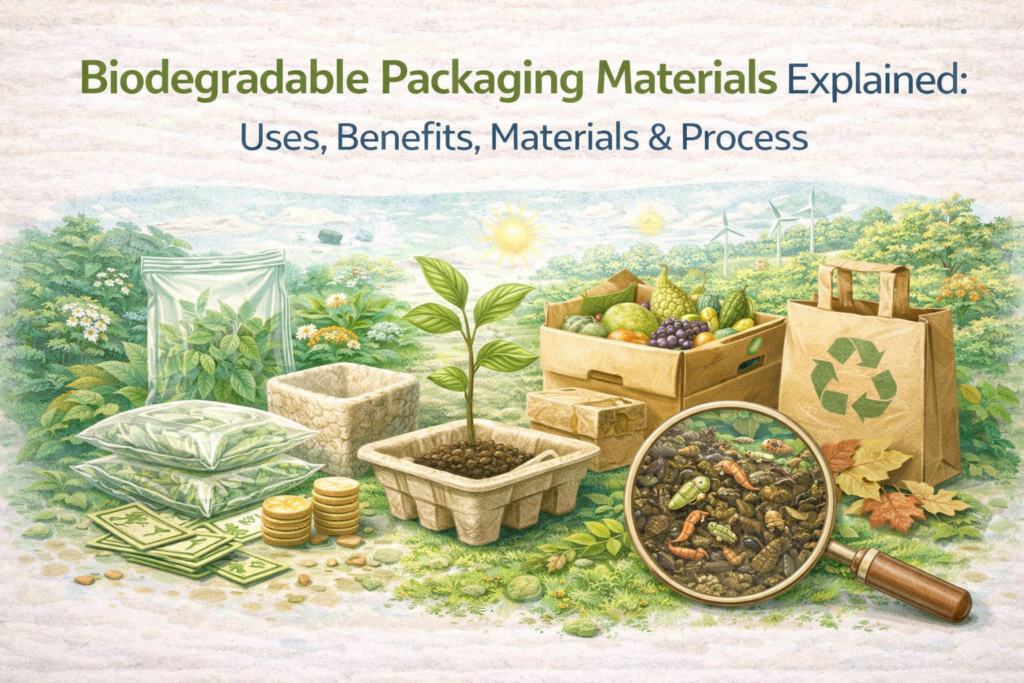
Biodegradable packaging materials have become one of the most discussed innovations in the packaging industry. At ProPackInsights, we analyze modern packaging trends, materials, and technologies to help businesses choose smarter packaging solutions.
With growing environmental concerns and strict regulations on plastic waste, companies are shifting toward biodegradable packing materials that naturally break down without harming the environment.
In this guide, we’ll explain:
- What biodegradable packaging is
- Common biodegradable materials
- The manufacturing process
- Uses across industries
- Key benefits and limitations
This article will help ecommerce brands, manufacturers, and packaging designers understand how bio packaging works and why it is becoming the future of sustainable packaging.
What is Biodegradable Packaging? How Does It Work?
Biodegradable packaging refers to packaging materials that decompose naturally through microorganisms such as bacteria, fungi, and algae.
Unlike traditional plastics that can take hundreds of years to break down, biodegradable materials break down into natural elements such as:
- Water
- Carbon dioxide
- Biomass
These materials reduce landfill waste and environmental pollution.
In simple terms, packaging biodegradable solutions allow packaging to return to nature without leaving toxic residues.
Many brands are already replacing traditional plastic packaging with biodegradable boxes and containers to meet sustainability goals.
Types of Biodegradable Packaging Materials
1. Paper and Cardboard Biodegradable Packaging
Paper-based packaging is one of the most widely used biodegradable packing materials.
Common examples include:
- Kraft paper packaging
- Corrugated cardboard boxes
- Paper food storage containers
- Paper pouches
These materials are made from renewable resources and can decompose quickly under natural conditions.
Businesses comparing sustainable materials often explore the environmental impact in detail, similar to our guide on Plastic vs Paper Packaging: Cost, Environmental Impact, Pros & Cons.
2. Plant-Based Bio Packaging
Plant-based packaging is produced using renewable natural fibers.
Common sources include:
- Corn starch
- Sugarcane bagasse
- Bamboo
- Seaweed
- Hemp fibers
These bio packaging materials are commonly used for:
- environmentally friendly to go containers
- biodegradable food packaging
- disposable restaurant packaging
Many food delivery companies now use environmentally friendly to go containers made from plant fiber to reduce plastic waste.
3. Biodegradable Plastic Alternatives (PLA)
PLA (Polylactic Acid) is one of the most common biodegradable materials used as a plastic replacement.
It is made from fermented plant starch such as:
- Corn
- Sugarcane
- Tapioca
PLA packaging is commonly used for:
- food containers
- beverage cups
- biodegradable film packaging
Although it looks similar to plastic, it decomposes much faster under composting conditions.
4. Mushroom (Mycelium) Packaging
Mycelium packaging is produced using mushroom roots grown around agricultural waste.
It is commonly used for:
- protective packaging inserts
- electronics packaging
- fragile product cushioning
These biodegradable packing materials are replacing foam packaging in many industries.
5. Seaweed-Based Packaging
Seaweed packaging is one of the newest innovations in biodegradable packaging.
Benefits include:
- Fully compostable
- Edible in some cases
- Fast-growing raw material
This technology is gaining attention in the food and beverage packaging industry.
How Biodegradable Packaging is Manufactured
Biodegradable Packaging Production Process
The production of biodegradable boxes and containers usually follows these steps:
1. Raw Material Extraction
Natural fibers such as plant starch, paper pulp, or agricultural waste are collected.
2. Material Processing
Raw materials are processed into pulp, polymer resin, or fiber sheets.
3. Packaging Forming
Manufacturers shape the material into packaging products such as:
- biodegradable boxes
- trays
- containers
- protective inserts
4. Drying and Finishing
The packaging is dried, compressed, and sometimes coated with natural barriers.
This process produces packaging biodegradable products suitable for industrial and commercial use.
Uses of Biodegradable Packaging
Industries Using Biodegradable Packaging
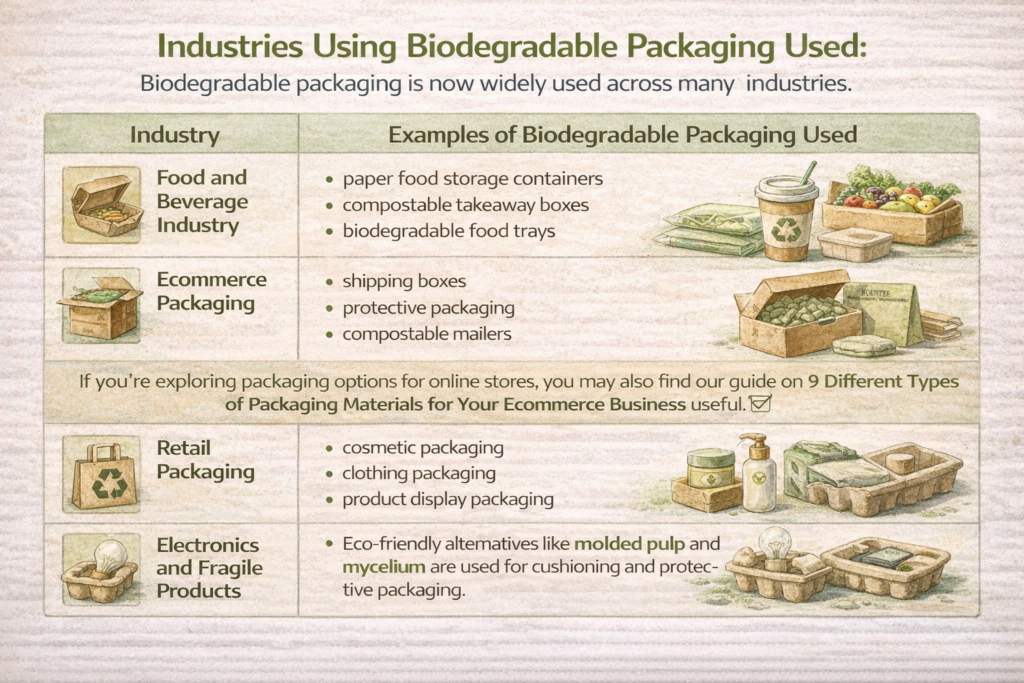
Biodegradable packaging is now widely used across many industries.
Food and Beverage Industry
Examples include:
- paper food storage containers
- compostable takeaway boxes
- biodegradable food trays
Ecommerce Packaging
Online stores use biodegradable packaging for:
- shipping boxes
- protective packaging
- compostable mailers
If you’re exploring packaging options for online stores, you may also find our guide on 9 Different Types of Packaging Materials for Your Ecommerce Business useful.
Retail Packaging
Retail brands use biodegradable packaging for:
- cosmetic packaging
- clothing packaging
- product display packaging
Electronics and Fragile Products
Eco-friendly alternatives like molded pulp and mycelium are used for cushioning and protective packaging.
Benefits of Biodegradable Packaging
Why Businesses Are Switching to Biodegradable Packaging
1. Reduced Environmental Impact
Biodegradable materials break down naturally, reducing landfill waste.
2. Lower Carbon Footprint
Many bio packaging materials are produced from renewable resources.
3. Improved Brand Image
Consumers increasingly prefer brands using sustainable packaging.
4. Government Compliance
Many countries now regulate single-use plastics, encouraging biodegradable packaging adoption.
5. Compostable Waste Management
Some biodegradable materials can be composted, returning nutrients to the soil.
Limitations of Biodegradable Packaging
Despite many benefits, biodegradable packaging also has some challenges.
Higher Production Costs
Sustainable packaging can be more expensive than traditional plastic.
Composting Infrastructure
Some materials require industrial composting facilities.
Durability Issues
Certain biodegradable materials may have lower moisture resistance.
However, technological innovations are quickly improving the durability and affordability of these materials.
Future of Biodegradable Packaging
The biodegradable packaging industry is expected to grow rapidly due to:
- sustainability regulations
- eco-conscious consumers
- innovations in bio packaging materials
Future developments include:
- algae-based packaging
- edible packaging films
- fully compostable flexible packaging
As research continues, biodegradable packing materials will become more efficient and cost-effective
Conclusion
Biodegradable packaging is transforming the global packaging industry by offering environmentally responsible alternatives to plastic. From biodegradable boxes and plant-based materials to mushroom packaging and compostable containers, businesses now have many sustainable options.
At ProPackInsights, we continuously explore modern packaging materials, technologies, and sustainability trends to help businesses adopt smarter packaging strategies.
As environmental awareness grows, bio packaging and biodegradable materials will play a critical role in shaping the future of packaging.
FAQ
What are biodegradable products?
Biodegradable products are materials that naturally break down into water, carbon dioxide, and organic matter through microorganisms.
What is biodegradable packaging used for?
Biodegradable packaging is used for:
food packaging
ecommerce shipping boxes
takeaway containers
protective packaging
Are biodegradable boxes eco-friendly?
Yes. Biodegradable boxes are eco-friendly because they decompose naturally and reduce landfill waste compared to plastic packaging.
Are biodegradable materials recyclable?
Some biodegradable materials are recyclable, while others are designed for composting instead of recycling.
What industries use biodegradable packaging the most?
Industries using biodegradable packaging include:
food delivery
ecommerce
cosmetics
retail
electronics
What are biodegradable packaging materials?
Biodegradable packaging materials are materials that naturally break down into water, carbon dioxide, and organic matter through microorganisms such as bacteria and fungi. Unlike traditional plastic packaging, which can take hundreds of years to decompose, biodegradable materials degrade much faster and leave minimal environmental impact.
Pingback: How Many Grams in an Ounce? Grams to Ounces Conversion Guide - propackinsights
Pingback: Wax Paper vs Butter Paper: What's the Real Difference?