
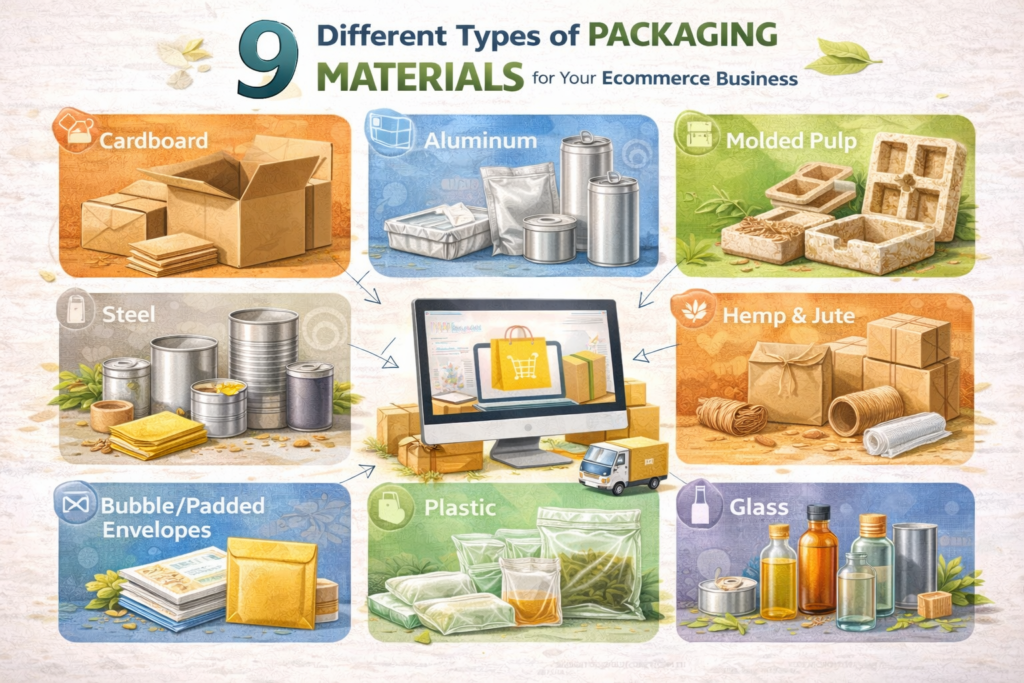
Ecommerce businesses depend heavily on reliable materials and packaging solutions to protect products, improve branding, and reduce shipping costs. At ProPackInsights, we research modern packaging technologies and help businesses understand the best materials for packaging across industries.
Choosing the right packaging is not just about protection—it affects logistics, sustainability, customer experience, and even brand recognition through elements like packaging logos and design.
In this guide, we explore 9 different types of packaging materials used by ecommerce companies, including their advantages, applications, and how advanced packaging systems are evolving.
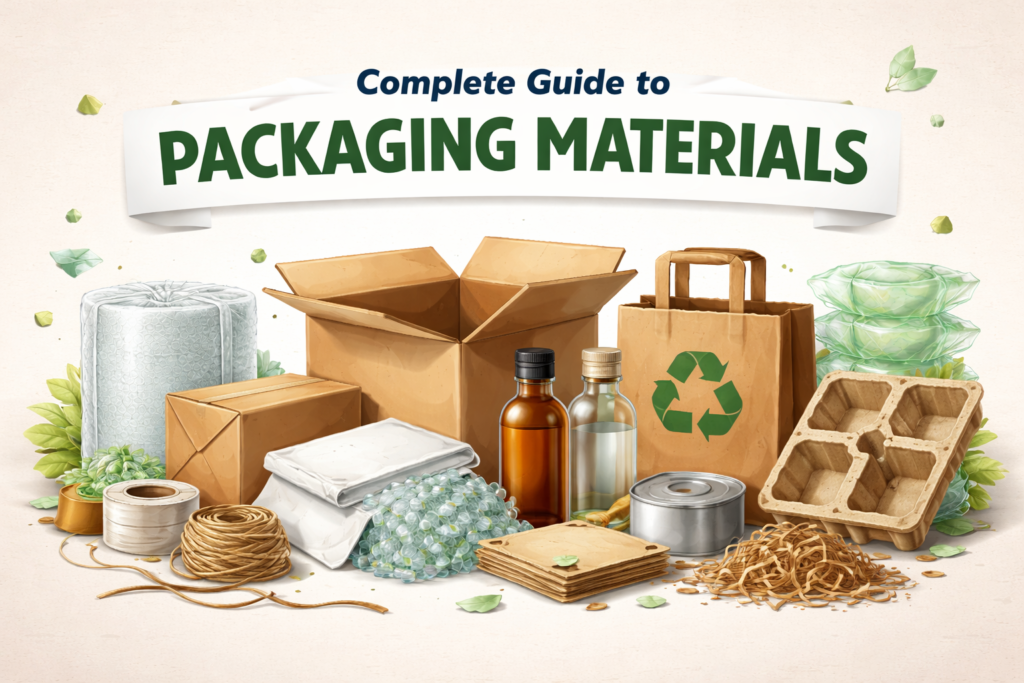
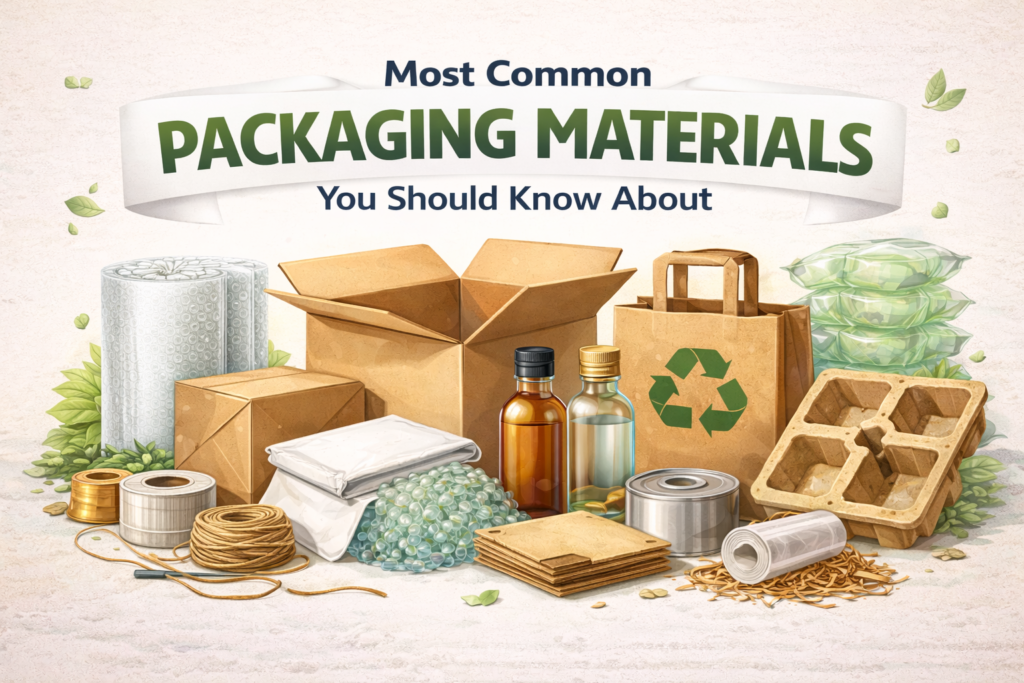
For a deeper overview of the industry, you can also read our guides on Complete Guide to Packaging Materials and Most Common Packaging Materials You Should Know About.
Types of Packaging Materials Used in Ecommerce
Ecommerce companies use a wide range of types of packaging materials depending on the product category, shipping requirements, and sustainability goals.
Modern packaging solutions often involve advanced package with different raw materials, combining paper, plastics, metals, and biodegradable components to create durable and cost-efficient packaging systems.
Below are the most common kinds of packaging materials used in ecommerce operations.
1. Corrugated Cardboard Packaging
Corrugated cardboard is one of the most widely used materials for packaging in ecommerce.
It consists of multiple paper layers with a fluted middle structure that provides strength and cushioning.
Common uses include:
- Shipping boxes
- Subscription boxes
- Product packaging for electronics and apparel
Advantages:
- Lightweight but strong
- Cost-effective for shipping
- Easily customizable with packaging logos
Because of its durability and recyclability, corrugated packaging remains a core component of modern materials and packaging systems.
2. Plastic Packaging Materials
Plastic packaging is one of the most versatile types packaging materials used across industries.
Common plastic packaging formats include:
- Poly mailers
- Plastic containers
- Flexible pouches
- Plastic seal packaging
Benefits of plastic packaging:
- High moisture resistance
- Lightweight for shipping efficiency
- Flexible for multiple product types
However, many ecommerce brands are transitioning toward recyclable or biodegradable plastics to reduce environmental impact.
3. Paper-Based Packaging
Paper packaging has become increasingly popular as companies move toward sustainable materials for packaging.
Examples include:
- Kraft paper packaging
- Paper mailers
- Folding cartons
Advantages:
- Eco-friendly and recyclable
- Lightweight for shipping
- Suitable for branding and vintage packaging aesthetics
Many sustainable ecommerce brands rely heavily on paper packaging solutions.
4. Glass Packaging
Glass packaging is commonly used for premium products that require contamination-free storage.
Typical applications include:
- Cosmetic packaging
- Beverage containers
- Luxury product packaging
Advantages include:
- Chemical resistance
- Premium visual appeal
- Long product shelf life
Because of its classic appearance, glass packaging is also used in vintage packaging design trends.
5. Metal and Aluminum Packaging
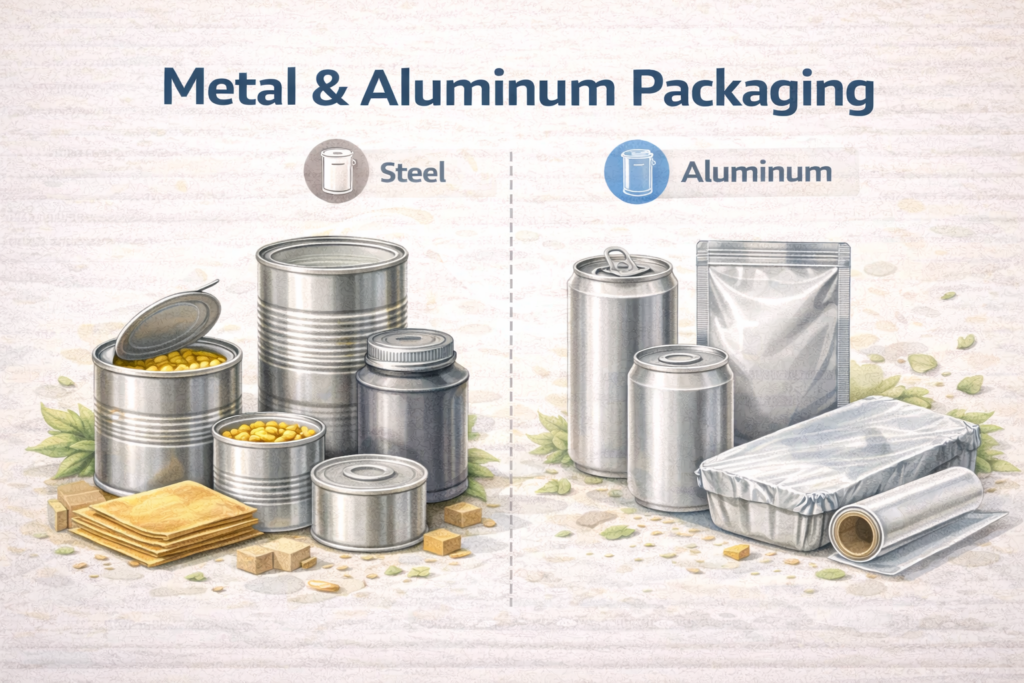
Metal packaging provides excellent durability and barrier protection.
Common products packaged in metal include:
- Food products
- Beverages
- Aerosol containers
Benefits:
- Strong protection against oxygen and light
- Long shelf life for packaged goods
- High recyclability
Metal packaging plays a critical role in advanced materials and packaging solutions.
6. Flexible Packaging
Flexible packaging has become one of the fastest-growing types of packages in ecommerce and retail.
Examples include:
- Stand-up pouches
- Vacuum packaging
- Roll stock packaging
Advantages:
- Reduced material usage
- Lower shipping weight
- High barrier protection
Many modern packaging systems combine flexible packaging with advanced package with different raw materials to improve durability and sustainability.
7. Dairy Packaging Solutions
Food ecommerce businesses often rely on specialized dairy packaging materials.
These packaging systems are designed to maintain freshness and prevent contamination.
Examples include:
- Milk cartons
- Yogurt cups
- Cheese packaging films
Dairy packaging typically uses multi-layer structures combining paper, plastic, and aluminum to maintain product quality.
8. Modified Atmosphere Packaging
Atmosphere packaging (also known as modified atmosphere packaging) is widely used in the food industry.
This packaging technique replaces oxygen with gases like nitrogen or carbon dioxide to extend shelf life.
Common applications include:
- Fresh meat packaging
- Ready-to-eat meals
- Fresh produce
Benefits include:
- Longer product freshness
- Reduced food spoilage
- Improved transportation stability
9. Specialized Industrial Packaging
Certain industries require specialized packaging systems designed for technical products.
Examples include:
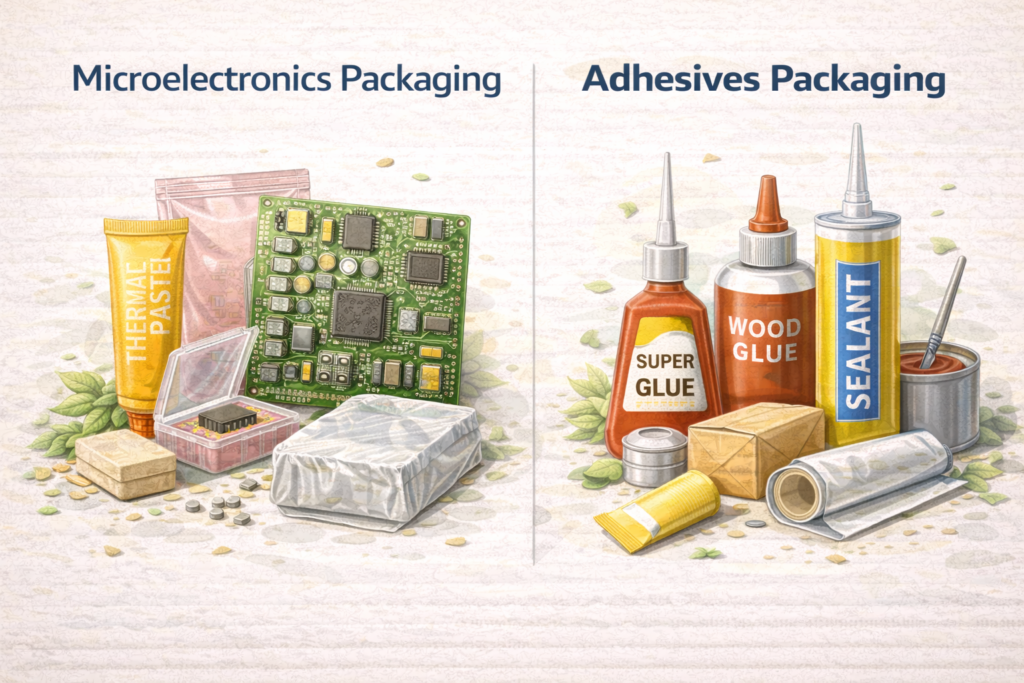
Microelectronics Packaging
Microelectronics packaging protects delicate electronic components such as chips and semiconductors.
These packages provide:
- Anti-static protection
- Moisture resistance
- Shock absorption
Adhesives Packaging
Adhesives packaging is designed to safely store chemical adhesives without leakage or contamination.
Common formats include:
- Tubes
- Cartridges
- Industrial containers
Role of Packaging Converters in Materials and Packaging
A packaging converter is responsible for transforming raw materials into finished packaging products.
Packaging converters typically handle:
- Material processing
- Printing and branding
- Custom packaging design
They help ecommerce companies develop packaging that aligns with branding strategies and product protection requirements.
How Ecommerce Businesses Choose the Right Packaging Materials
Selecting the right materials for packaging depends on several factors.
Key considerations include:
- Product weight and fragility
- Shipping distance
- Environmental sustainability
- Branding and packaging logos
- Packaging cost efficiency
For example:
- Electronics require protective microelectronics packaging.
- Food products rely on atmosphere packaging for freshness.
- Retail products often use creative vintage packaging for branding.
The Future of Ecommerce Packaging
The future of packaging is driven by innovation, sustainability, and technology.
Companies are now investing in:
- Smart packaging technologies
- Biodegradable materials
- Minimalist packaging designs
- AI-driven packaging optimization
These advancements are shaping the next generation of advanced package with different raw materials used across global ecommerce markets.
Conclusion
Understanding the different types of packaging materials helps ecommerce businesses improve product safety, reduce shipping costs, and strengthen brand identity.
From corrugated cardboard and flexible packaging to dairy packaging and microelectronics packaging, each material serves a specific purpose within modern supply chains.
As ecommerce continues to grow worldwide, companies must adopt innovative materials and packaging solutions that balance protection, sustainability, and cost efficiency.
For more expert insights into packaging materials and industry trends, explore additional guides at ProPackInsights.
FAQs
What are the different types of packaging materials used in e-commerce?
Ecommerce businesses typically use several different types of packaging materials, including:
Corrugated cardboard boxes
Plastic packaging and poly mailers
Paper packaging
Glass containers
Metal packaging
Flexible packaging pouches
Atmosphere packaging for food products
Each material serves a specific purpose depending on the product type and shipping requirements.
Why are packaging materials important for ecommerce businesses?
Packaging materials protect products during transportation, improve brand presentation, and enhance the customer experience. High-quality materials and packaging also help reduce product damage, lower return rates, and improve brand recognition through elements like packaging logos and design.
What is atmosphere packaging?
Atmosphere packaging (Modified Atmosphere Packaging) is a packaging technology used mainly in the food industry. It replaces oxygen inside the package with gases such as nitrogen or carbon dioxide to extend shelf life and maintain product freshness.
What is the role of a packaging converter?
A packaging converter is a company that converts raw materials such as paper, plastic, and aluminum into finished packaging products. Packaging converters handle processes like printing, laminating, cutting, and shaping materials into usable packaging formats.
How do businesses choose the right packaging materials?
Businesses choose packaging materials based on several factors, including:
Product fragility
Shipping distance
Environmental impact
Cost efficiency
Branding requirements
Selecting the right types of packaging materials ensures product safety while optimizing logistics and packaging performance.
Pingback: Guide to Packaging Materials: Types, Uses, Costs & Global Industry Trends - propackinsights