Packaging plays a critical role in modern supply chains, protecting products, supporting logistics, and shaping brand identity. According to industry reports, the global packaging market exceeded $1 trillion in 2024, driven by e-commerce growth, food safety regulations, and sustainable packaging demand.
Businesses today choose packaging materials based on cost, durability, sustainability, and product compatibility. From traditional paperboard boxes to emerging bio-based materials, understanding the most common packaging materials helps companies make better packaging decisions.
This guide explains the most widely used packaging materials across industries, their advantages, limitations, and real-world applications.
Types of Packaging Materials Used in Modern Industries
Packaging materials generally fall into five major categories:
- Paper-based packaging materials
- Plastic packaging materials
- Glass packaging materials
- Metal packaging materials
- Natural and emerging sustainable materials
Each material serves different purposes depending on product protection, shelf life, and transportation requirements.
Paper Packaging Materials
Paper-based materials are among the most widely used packaging materials globally. They are lightweight, cost-effective, and increasingly preferred due to their recyclability.
Industries such as food, e-commerce, cosmetics, and retail rely heavily on paper packaging.
Kraft Paper Packaging
Kraft paper is a strong, durable packaging material commonly used for:
- grocery bags
- food packaging
- void fill in shipping boxes
- protective wrapping
The material is produced through the kraft pulping process, which preserves cellulose fibers and increases strength.
Advantages
- recyclable
- biodegradable
- inexpensive
- flexible packaging applications
Limitations
- limited water resistance
- requires coating for moisture protection
Because of its strength and sustainability profile, kraft paper is widely used in eco-friendly packaging solutions.
Paperboard Packaging
Paperboard is thicker than standard paper and commonly used in retail packaging.
Examples include:
- cereal boxes
- cosmetic packaging
- pharmaceutical boxes
- consumer electronics packaging
Paperboard allows high-quality printing, making it ideal for branding and product presentation.
Businesses often use paperboard when packaging requires visual appeal and structural integrity.
Corrugated Cardboard
Corrugated cardboard is one of the most common packaging materials for shipping and logistics.
It consists of three layers:
- outer liner
- inner liner
- fluted middle layer
This structure provides excellent strength-to-weight ratio, making it ideal for transportation packaging.
Key benefits
- high durability
- lightweight structure
- excellent cushioning properties
- recyclable up to 20+ times
Corrugated packaging dominates the e-commerce packaging sector, where product protection during shipping is critical.
Molded Pulp Packaging
Molded pulp is produced from recycled paper fibers and agricultural waste. It is commonly used for:
- electronics inserts
- egg cartons
- protective packaging trays
Companies increasingly adopt molded pulp as a replacement for plastic foam packaging.
The material is biodegradable, recyclable, and compatible with sustainable packaging initiatives.
Plastic Packaging Materials
Plastic remains one of the most versatile packaging materials due to its flexibility, durability, and barrier protection.
It is widely used in food packaging, beverage containers, personal care products, and flexible packaging formats.
However, growing environmental concerns have increased pressure to develop recyclable and biodegradable plastic alternatives.
PET (Polyethylene Terephthalate)
PET is commonly used for:
- beverage bottles
- food containers
- blister packaging
- clear packaging films
PET provides excellent clarity, strength, and moisture barrier properties.
It is also the most widely recycled plastic packaging material, especially in beverage packaging industries.
Polypropylene (PP)
Polypropylene is a durable plastic often used for:
- yogurt containers
- bottle caps
- microwaveable food containers
- flexible packaging films
PP is valued for its heat resistance and chemical stability, making it suitable for food packaging applications.
Polyethylene (PE)
Polyethylene is one of the most common plastics used in packaging.
It appears in forms such as:
- plastic bags
- shrink wrap
- stretch films
- bubble wrap
Low-density polyethylene (LDPE) is commonly used for flexible packaging and protective films.
Despite its versatility, recycling rates for flexible polyethylene packaging remain relatively low.
Polystyrene (Foam Packaging)
Polystyrene foam, often known as Styrofoam, has been widely used for:
- protective packaging
- food containers
- packing peanuts
Its lightweight and shock-absorbing properties make it effective for fragile products.
However, due to environmental pollution concerns, many companies are replacing polystyrene with paper-based or molded pulp alternatives.
Glass Packaging Materials
Glass has been used for packaging for centuries, especially in food, beverage, and pharmaceutical industries.
The material is made primarily from silica (sand), soda ash, and limestone.
Glass packaging is valued for several reasons:
- chemical stability
- non-reactive surface
- premium product appearance
- infinite recyclability
Common applications include:
- beverage bottles
- cosmetic containers
- pharmaceutical vials
- food jars
One disadvantage of glass packaging is its weight, which increases transportation costs compared with lighter materials like plastic or aluminum.
Metal Packaging Materials
Metal packaging is widely used in industries requiring strong barrier protection and long shelf life.
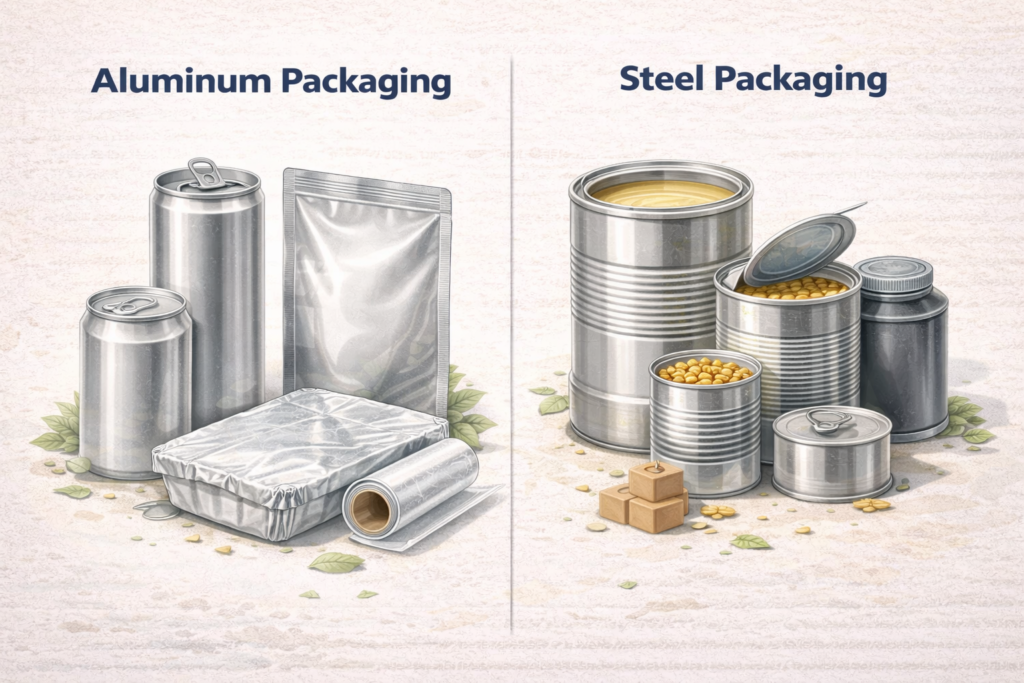
The two most common metals used for packaging are:
- aluminum
- steel
Aluminum Packaging
Aluminum is commonly used for:
- beverage cans
- aerosol containers
- foil packaging
It is lightweight, corrosion-resistant, and infinitely recyclable, making it one of the most sustainable metal packaging materials.
Steel Packaging
Steel is used primarily for:
- canned food products
- industrial containers
- large shipping drums
Steel packaging offers excellent strength and product protection, particularly for food preservation and chemical storage.
Natural and Renewable Packaging Materials
Growing environmental awareness has increased demand for renewable packaging materials derived from plants and natural fibers.
Bamboo Packaging
Bamboo is one of the fastest-growing plants on earth and offers several advantages:
- renewable raw material
- strong fiber structure
- biodegradable properties
It is often used in cosmetic packaging and luxury product packaging.
Cork Packaging
Cork comes from the bark of cork oak trees and is widely used for:
- wine bottle stoppers
- protective packaging inserts
- specialty product packaging
It is lightweight, water resistant, and completely renewable.
Emerging Sustainable Packaging Materials
Innovation in packaging technology is creating new materials designed to reduce environmental impact.
Some promising alternatives include:
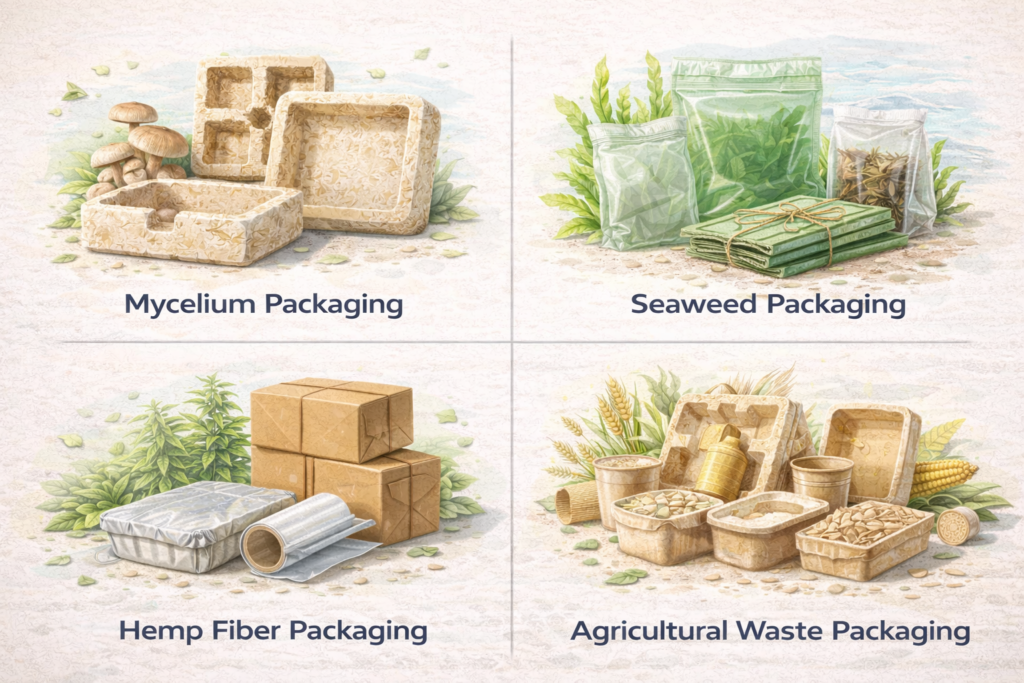
Mycelium Packaging
Mycelium, the root structure of mushrooms, can be grown into custom protective packaging shapes.
It is biodegradable and can replace foam packaging materials.
Seaweed Packaging
Seaweed-based materials are gaining attention as biodegradable packaging films that dissolve naturally.
These materials have potential applications in food packaging and single-use packaging solutions.
Hemp Fiber Packaging
Hemp fibers are strong and renewable. They can be used to produce:
- biodegradable paper
- molded packaging components
- eco-friendly packaging inserts
Agricultural Waste Packaging
Agricultural by-products such as:
- wheat straw
- sugarcane bagasse
- rice husks
are increasingly used to produce sustainable packaging materials.
These materials reduce waste while creating environmentally friendly packaging solutions.
Best Packaging Materials for Shipping
Shipping packaging must protect products during transportation while remaining cost-efficient.
The most effective shipping materials include:
| Material | Best Use Case |
| Corrugated cardboard | shipping boxes |
| Kraft paper | void fill and wrapping |
| Molded pulp | protective inserts |
| Polyethylene film | flexible wrapping |
| Wood pallets | heavy cargo shipping |
Using the right combination of these materials helps businesses reduce shipping damage and logistics costs.
How Businesses Choose Packaging Materials
Companies evaluate several factors when selecting packaging materials:
Product protection
Fragile products require cushioning materials such as molded pulp or foam.
Cost efficiency
Low-cost materials like corrugated cardboard reduce packaging expenses.
Sustainability goals
Many brands now prioritize recyclable or biodegradable materials.
Brand presentation
Retail packaging often focuses on design and printing quality.
Balancing these factors helps companies develop effective and sustainable packaging strategies.
The Future of Packaging Materials
The packaging industry is rapidly evolving as sustainability becomes a major priority.
Several trends are shaping the future of packaging:
- bio-based packaging materials
- recyclable mono-material packaging
- compostable packaging innovations
- lightweight packaging designs
- circular economy packaging systems
As regulations tighten and consumers demand environmentally responsible products, companies will increasingly adopt sustainable packaging materials and innovative alternatives.
FAQs
What are the most common packaging materials used today?
The most common packaging materials include paper, cardboard, plastic, glass, metal, and biodegradable materials. These materials are widely used because they offer different benefits such as durability, cost efficiency, and product protection. Paper and cardboard are popular for shipping boxes, while plastic is commonly used for flexible packaging and food containers.
What are the main types of packaging materials?
The main types of packaging materials include:
Paper and cardboard packaging
Plastic packaging
Glass packaging
Metal packaging
Wood packaging
Biodegradable packaging materials
Why is plastic widely used in packaging?
Plastic is widely used because it is lightweight, durable, flexible, and cost-effective. It also provides strong moisture and air barriers, which makes it ideal for food packaging, flexible packaging films, and protective packaging. However, due to environmental concerns, many businesses are now exploring sustainable alternatives.
Is cardboard a good packaging material?
Yes, cardboard is one of the most popular packaging materials because it is lightweight, recyclable, and cost-effective. Corrugated cardboard is widely used in ecommerce packaging and shipping boxes because it provides excellent product protection during transportation.